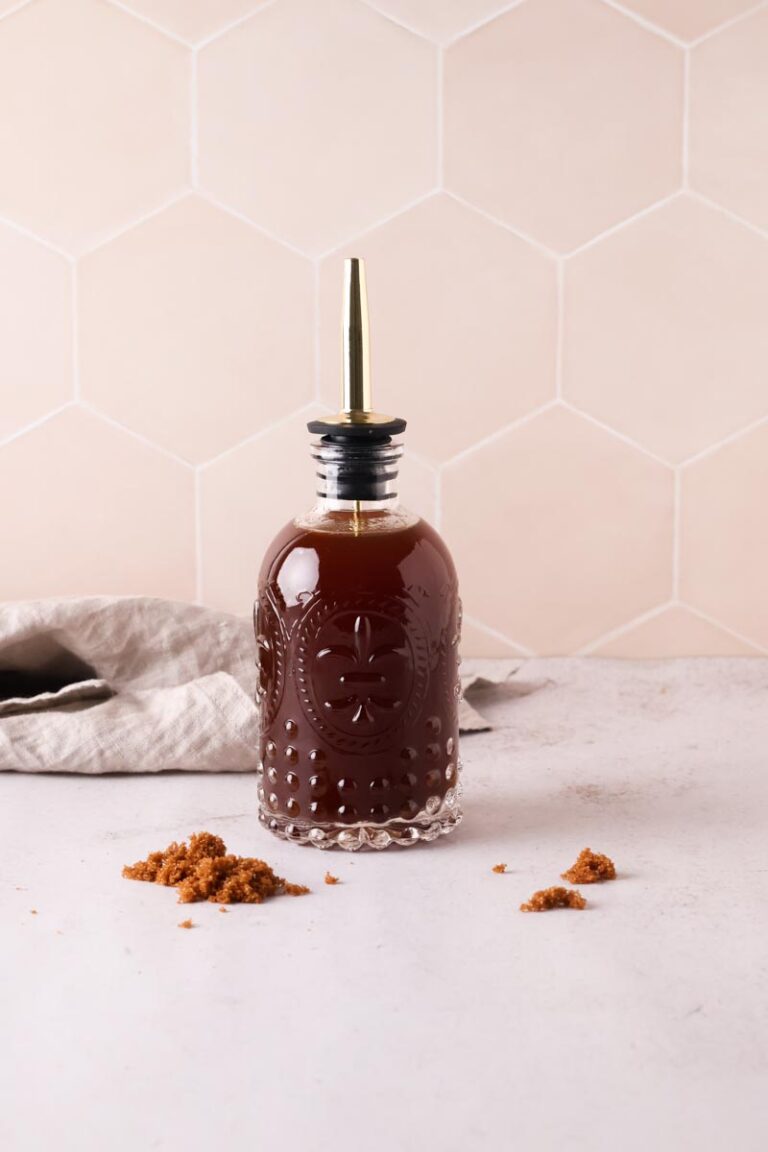
Simple Syrup Ratio Guide – Which to Use and When
Quick answer: Simple syrup is most commonly made at a 1:1 ratio (equal parts sugar and water), which works for most drinks and recipes. A 2:1 ratio (two parts sugar, one part water) makes a richer, more concentrated syrup that lasts longer and dilutes drinks less. Which you need depends on what you’re making – read on for the full breakdown.
If you’re here for the math: a 1:1 ratio simply means equal parts of two things – in syrup, that’s equal parts sugar and water. A 2:1 ratio means two parts sugar to one part water. That’s the core of it.
The simple syrup ratio you use changes everything from texture, dilution, shelf life, and how flavor is expressed. Here’s how to choose the right one, every time.
After making dozens of batches – fruit syrups, spiced ones, coffee syrups and gift batches – I realized the ratio changes everything. Texture, sweetness, dilution, shelf life, and even how flavor sits on your tongue.
Two ratios form the foundation of almost every syrup I make:
1:1 – standard simple syrup
2:1 – rich simple syrup
Once you understand how each behaves, you stop copying recipes and start designing them.
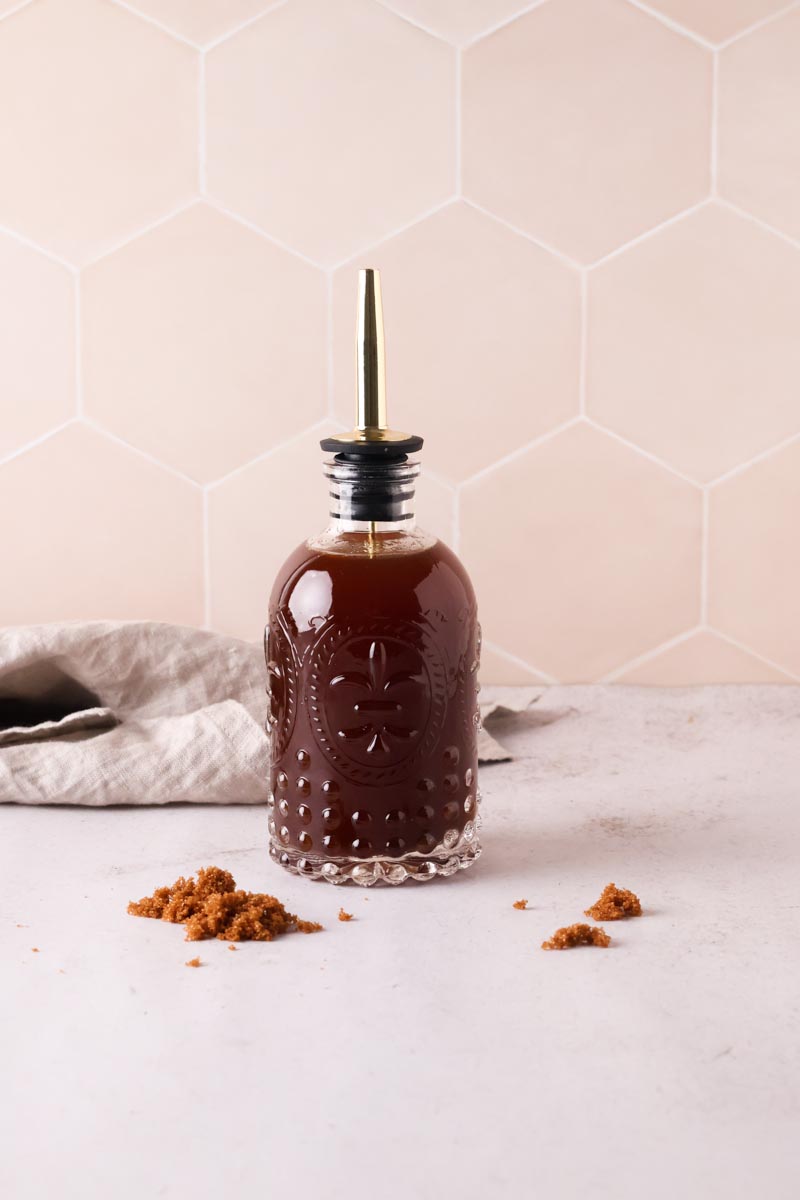
What is 1:1 simple syrup ratio?
A 1 to 1 simple syrup ratio is equal parts sugar and water – any amount, as long as they match.
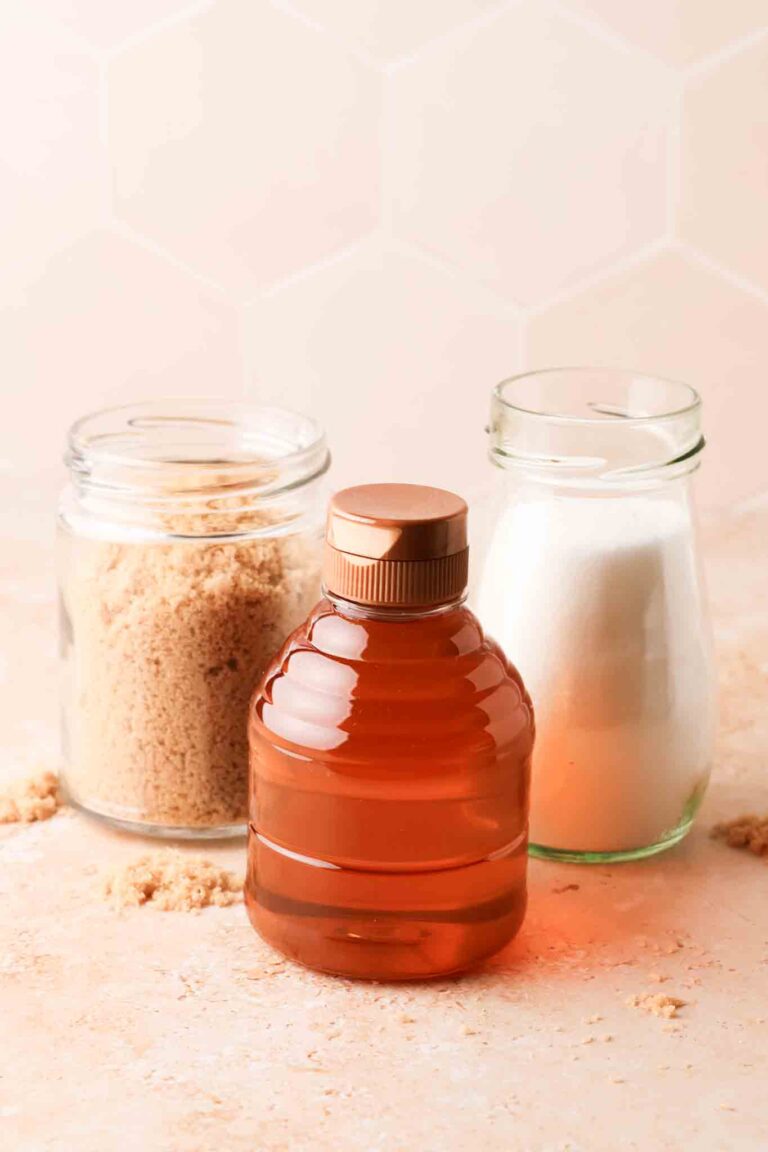
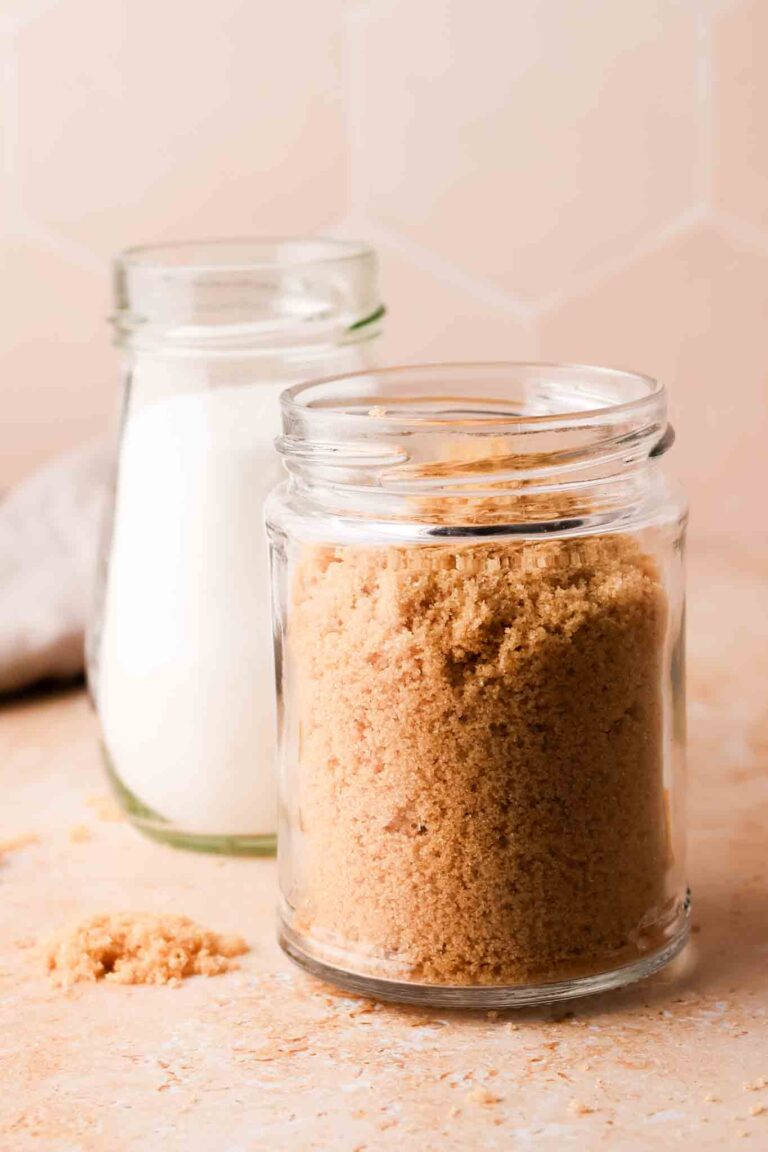
1 cup sugar + 1 cup water
When it cools, 1:1 is light and fluid. It pours almost like water and blends into cold drinks without any real stirring. The sweetness is present but not heavy – it supports other flavors rather than leading them.
One practical note: because 1:1 is the standard American bar ratio, it’s what most published cocktail recipes are calibrated for. One tablespoon of 1:1 roughly balances the acidity of one tablespoon of citrus juice, which makes building balanced drinks very intuitive.
Use 1:1 when:
- Sweetening iced coffee, lemonade, or cold brew
- Making fruit syrups where brightness and freshness matter
- Infusing delicate herbs like mint, basil, or lavender
- Batching large quantities where flexibility to adjust is useful
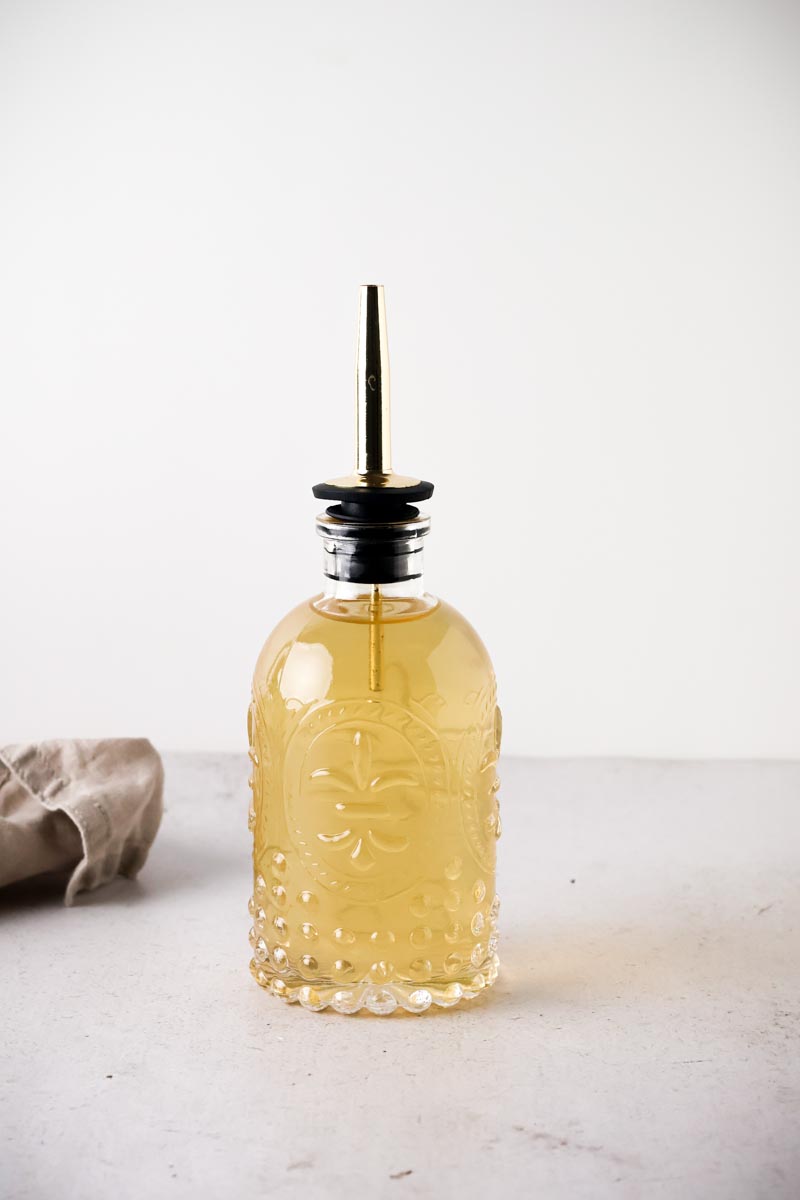
What is 2:1 simple syrup ratio?
A rich simple syrup ratio is 2 parts sugar to 1 part water.
2 cups sugar + 1 cup water
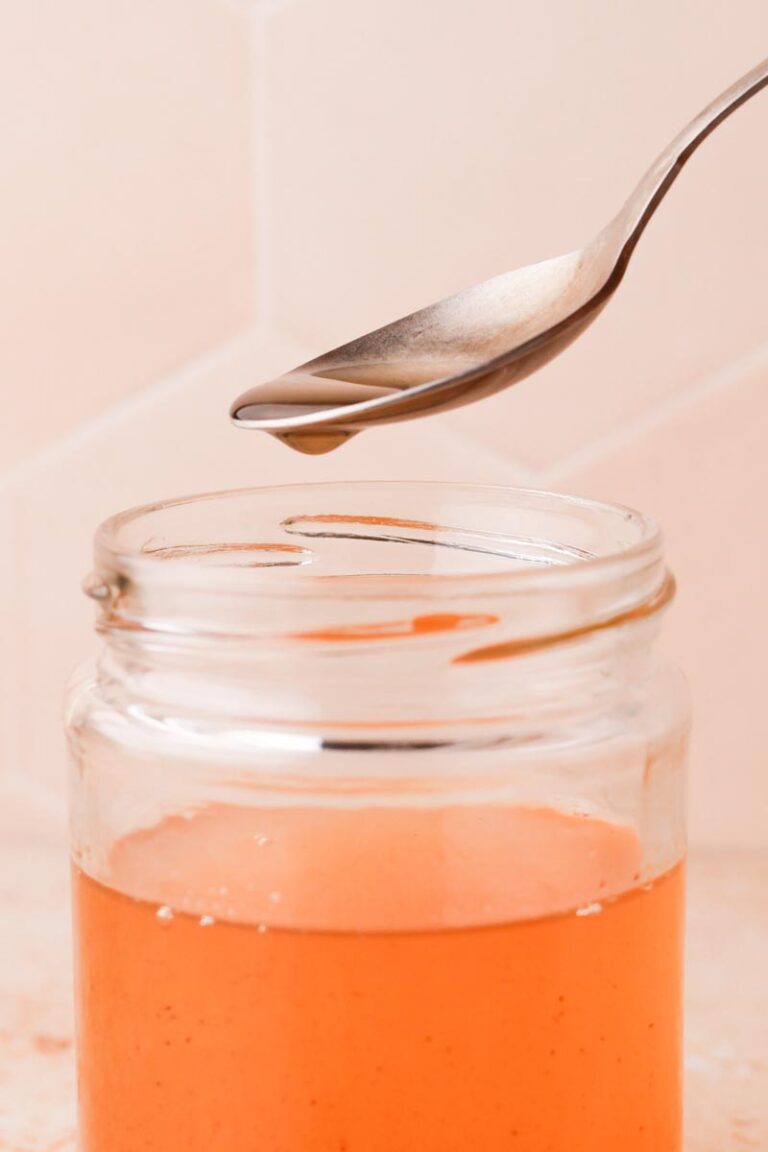
The texture difference is immediate. A spoon drawn through 2:1 syrup has a slight coat to it – thicker, more structured. Because it’s significantly more concentrated, you use less of it per drink, which is where the real efficiency comes from.
An important clarification: 2:1 is not twice as sweet as 1:1. It’s roughly 1.35 times sweeter by volume. This matters when substituting – a tablespoon of 2:1 doesn’t replace two tablespoons of 1:1. (More on this below.)
The biggest payoff shows up in espresso. A 1:1 syrup will slightly thin your coffee; 2:1 adds sweetness while keeping the body of the drink intact. My strawberry coffee syrup uses 2:1 for exactly this reason – the flavor is bold enough to stand up to espresso without drowning it in water.
Use 2:1 when:
- Making bold spice syrups – clove syrup, cinnamon, cardamom simple syrup, ginger simple syrup
- Sweetening espresso drinks or spirit-forward cocktails without diluting them
- You want a longer fridge life (weeks longer than 1:1)
- Giving syrup as a gift or selling in small batches
Get exact sugar, water, and yield amounts for any ratio — 1:1, 2:1, or 1:2 — in grams, ounces, or cups.
Use the simple syrup calculator →Simple syrup ratio: which should you use?
Here’s how the two ratios compare across the factors that actually matter:
| 1:1 Standard | 2:1 Rich | Why it matters | |
| Texture | Light, fluid | Thicker, coats spoon | Affects mouthfeel in drinks |
| Sweetness per tsp | Standard | ~1.35× more | Use less 2:1 to hit same sweetness |
| Dilution | Higher | Lower | Critical for carbonated or spirit drinks |
| Fridge life | 2–3 weeks | 1–2 months | Higher sugar slows spoilage |
| Best for flavors | Delicate (mint, citrus) | Bold (spice, ginger) | Ratio affects flavor expression |
| Heat needed? | No (can cold-process) | Yes, heat helps dissolve | 2:1 is too concentrated to stir cold |
Does simple syrup ratio affect your drink?
Every time you add syrup, you’re also adding water. With 1:1, one tablespoon contributes meaningful water content – around 5–8% extra dilution depending on the recipe. With 2:1, you need less syrup to hit the same sweetness, so the total water added drops significantly.
This matters most in sparkling drinks. Too much 1:1 can flatten carbonation. Switching to 2:1 solved that problem for me immediately. It matters in cocktails too: if you’re making a Whiskey Sour or an Old Fashioned and want to control dilution precisely, 2:1 gives you much more control.
How does the syrup ratio affect flavor extraction?
This is the part most people don’t expect. Delicate ingredients come through cleaner and fresher in a 1:1 base. The lighter structure lets subtle flavors breathe without getting flattened. This is why syrups like mint, rosemary, thyme, and sage all work best at 1:1 – the delicacy of the herb is exactly what you’re trying to preserve.
Bold ingredients carry better in 2:1. The denser base anchors the spice, and the final syrup feels fuller and more intentional. Clove syrup, ginger syrup, chai syrup, and apple cinnamon syrup all benefit from the extra structure 2:1 provides. If you’ve ever made a ginger simple syrup that tasted thin or watery, trying it at 2:1 will change your opinion of the recipe.
Can you substitute one ratio for the other?
Yes, but not blindly, and the math is less obvious than it looks.
Because 2:1 is about 1.35 times sweeter than 1:1 (not twice as sweet), the substitution isn’t a simple halving. As a working rule:
1 tablespoon of 1:1 → use about 2 teaspoons of 2:1, then taste
Start conservative and adjust. The key is understanding that 2:1 isn’t just sweeter, it’s more concentrated in every dimension, including dilution and flavor impact.
So which simple syrup ratio should you use?
It’s not about better or worse. Think of them as different tools:
1:1 = lightness and flexibility. Use it for bright flavors, delicate infusions, and when following standard recipes.
2:1 = structure and longevity. Use it for bold syrups, espresso drinks, long shelf life, and precision in cocktails.
When I’m experimenting with a new flavor, I start with 1:1. When I’m refining it for regular use, gifting, or selling, I move to 2:1.
More FAQs on simple syrup ratio
Should simple syrup be 1:1 or 2:1?
It depends on your use. A 1:1 ratio (equal parts sugar and water) is standard and works for most drinks, cocktails, and recipes. A 2:1 ratio (more sugar than water) makes a richer, sweeter syrup that lasts longer and is used when you want more sweetness without adding extra liquid.
How do you make 2:1 simple syrup?
Combine 2 cups of sugar with 1 cup of water in a saucepan over medium-low heat. Stir until the sugar is fully dissolved – don’t let it boil. Remove from heat and cool completely before bottling. Heat is required for 2:1 as the concentration is too high to dissolve cold.
Is simple syrup 1 to 1?
Standard simple syrup is 1:1 – equal parts sugar and water by volume. This is the default ratio for most cocktail recipes and everyday use. Rich simple syrup uses a 2:1 ratio for a sweeter, more concentrated result.
Simple syrup by weight or volume – which is more accurate?
Weight is more accurate, especially for 2:1 or when replicating recipes consistently. Volume works fine for everyday 1:1 batches, but different sugars pack differently into a cup, which affects concentration. If you’re selling syrups or need precision, use a kitchen scale.
How much sugar is in 1 oz of simple syrup?
In a 1:1 simple syrup, roughly 0.5 oz (about 14g) of sugar per 1 oz of syrup. In a 2:1 syrup, approximately 0.67 oz (about 19g) of sugar per 1 oz of syrup. The exact amount varies slightly depending on whether you measure by weight or volume.
What is rich simple syrup?
Rich simple syrup is a 2:1 ratio – two parts sugar to one part water. It’s thicker, sweeter per teaspoon, and lasts significantly longer in the fridge than standard 1:1 syrup. It’s the preferred choice for espresso drinks, bold spice syrups, and gifting.
What is the water-to-sugar ratio for simple syrup?
For standard simple syrup, the water-to-sugar ratio is 1:1 – equal parts by volume. For rich simple syrup, it’s 1 part water to 2 parts sugar. Both ratios are measured before dissolving; the final volume will be slightly less than the combined starting amounts due to how sugar and water molecules pack together.
What is the concentration of simple syrup?
A 1:1 simple syrup is approximately 50% sugar by weight (Brix). A 2:1 syrup is around 66% sugar by weight. Higher concentration means less dilution per serving, longer shelf life, and more sweetness per teaspoon – which is why the ratio matters as much as it does.
What is a 2:1 ratio?
A 2:1 ratio means two parts of one ingredient to one part of another. In simple syrup, that’s 2 parts sugar to 1 part water – so 2 cups sugar dissolved in 1 cup water. The result is a richer, more concentrated syrup than the standard 1:1.

Welcome! I’m Rakiya, a syrup enthusiast with years of experience developing flavors. Every recipe is tested and refined for tasty results. My tips, variations and photos come directly from my kitchen experiments.