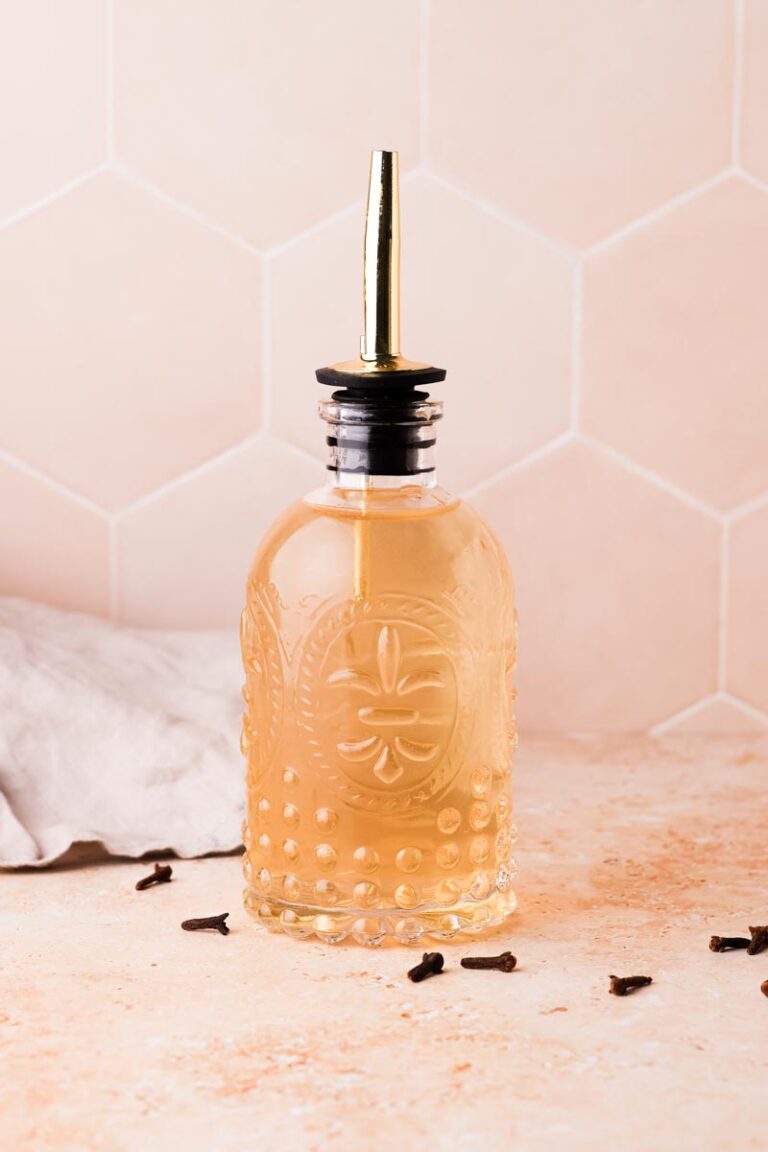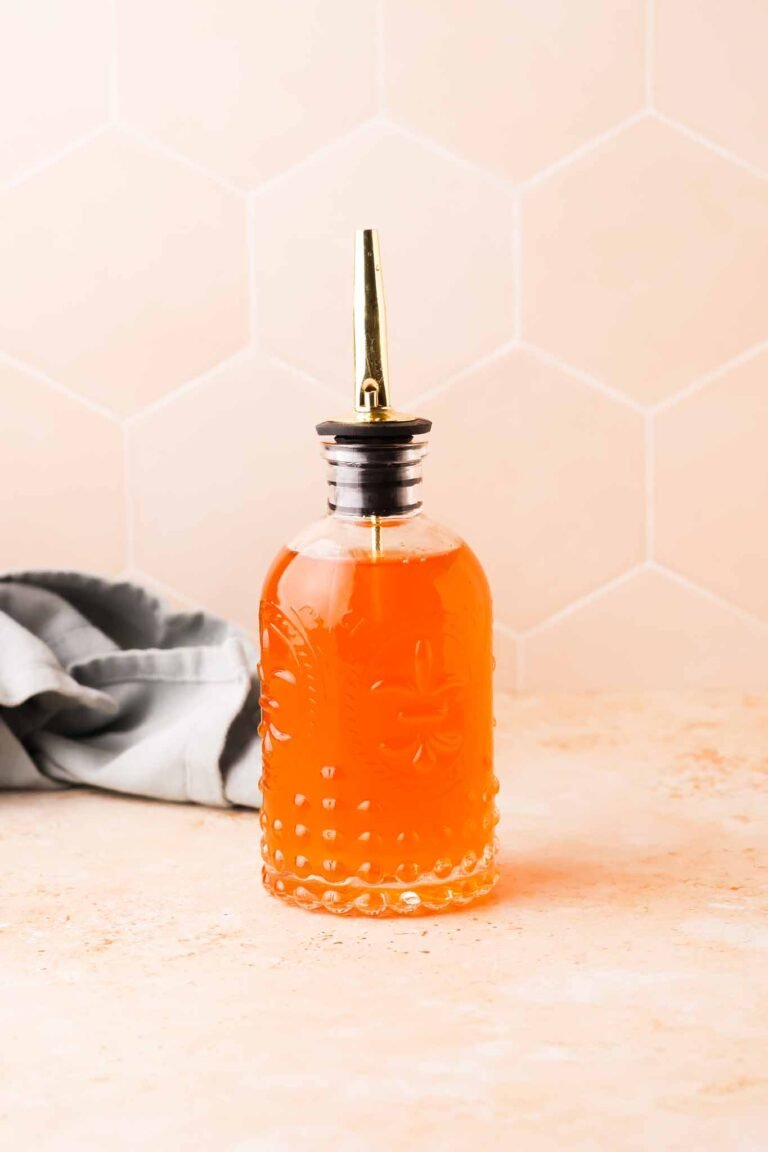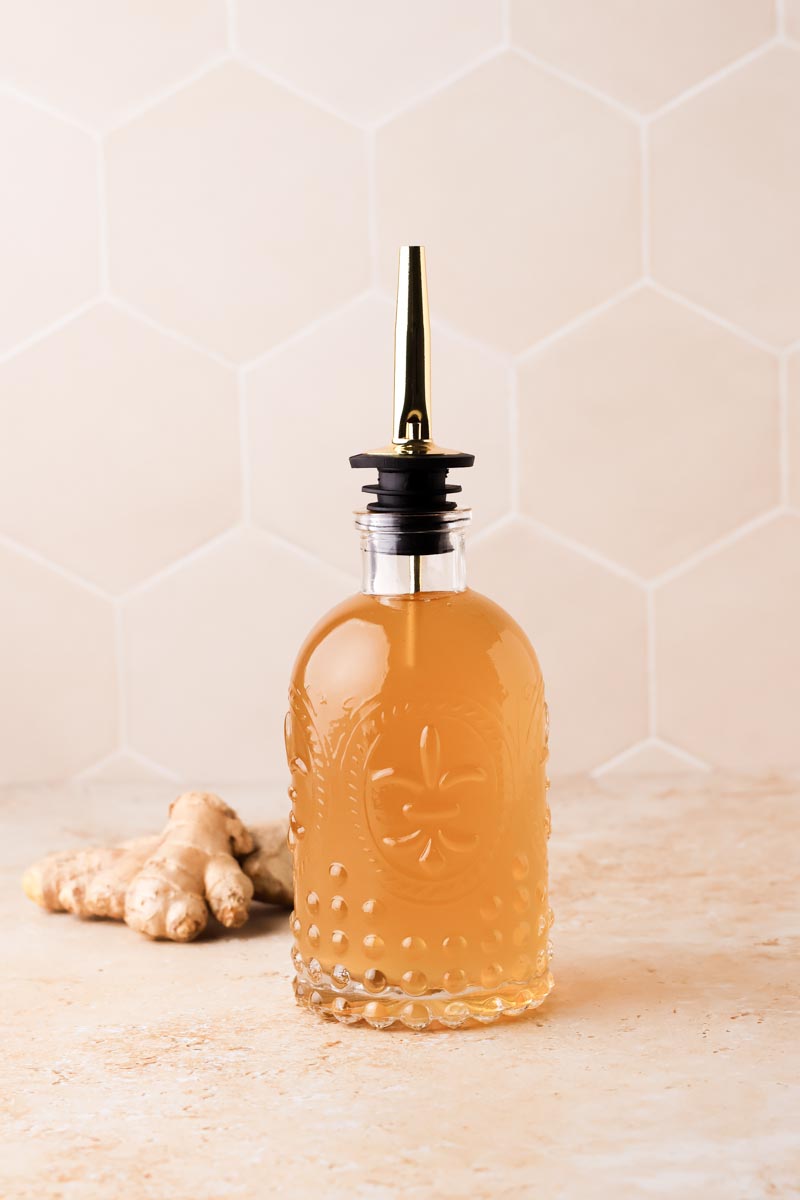
Ginger Simple Syrup
This ginger simple syrup recipe is a game-changer for cocktails, mocktails, ginger ale and coffee. You can make a fresh ginger syrup batch at home with 3 ingredients in under 10 minutes!
How I developed this ginger simple syrup recipe
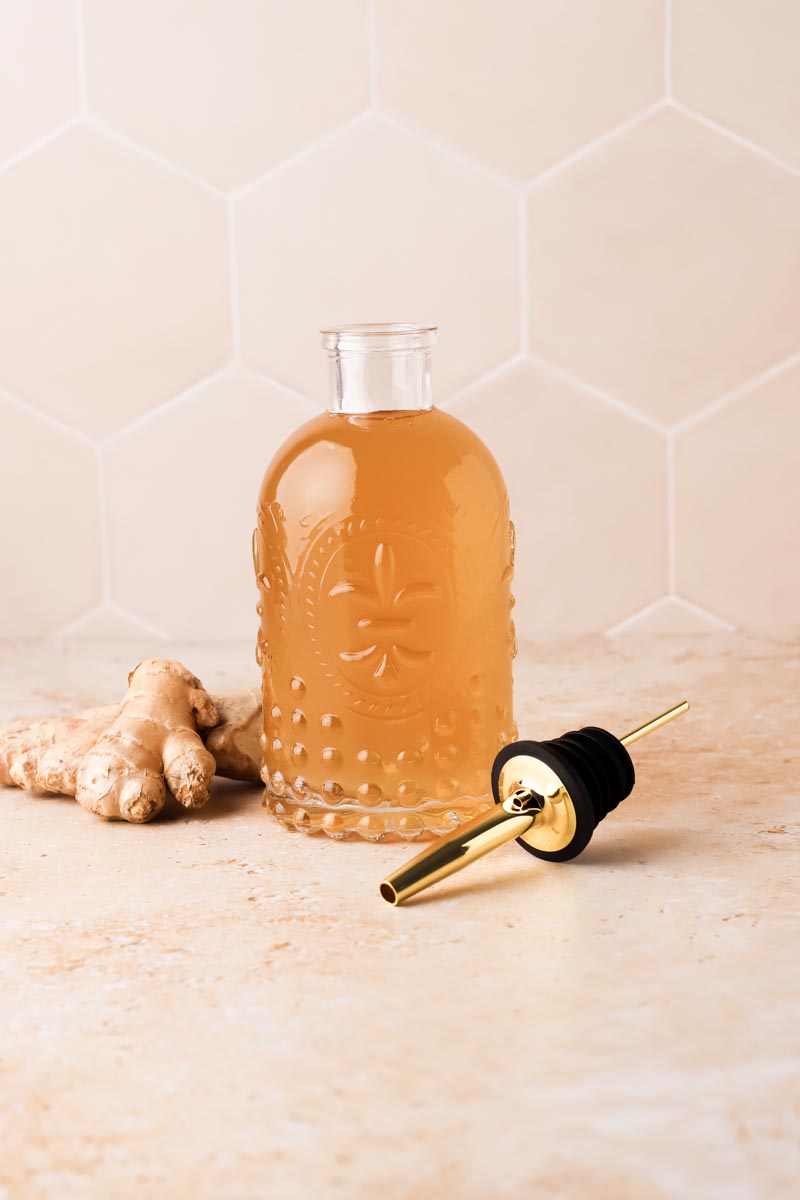
Making this simple syrup with ginger takes a simple approach. I tested fresh ginger against ground first; ground is faster but produces a syrup that is dull, cloudy and doesn’t feel smooth. Fresh ginger steeped in hot syrup gives a clean, layered heat with a brightness that ground simply doesn’t have.
Ratio for ginger simple syrup recipe
The mix is 1/2 cup white sugar and 1/2 cup light brown sugar to 1 cup water, which gives a total sugar-to-water ratio of 1:1 while adding the warmth of brown sugar without letting it take over. At this ratio the syrup is fluid enough to dissolve in cold drinks, concentrated enough that one tablespoon does real work in a cocktail, and balanced enough to use in coffee without tipping sweet.
For a stronger, more intensely spiced syrup that’s better suited to ginger beer, ginger ale, or cocktails where you want the ginger to lead, use 2 cups total sugar to 1 cup water and increase the ginger by a third. The result is noticeably more viscous (thick) and the heat lingers longer.
Ingredients for ginger simple syrup
- Fresh ginger – this is the whole recipe. Use a generous amount of fresh ginger root per cup of water. The younger and more fragrant the ginger, the better. Old, fibrous ginger root produces a flatter, hotter syrup without the floral brightness of fresh.
- White sugar – keeps the ginger flavor sharp and clear. All white sugar works fine if that’s what you have but the syrup will be slightly sharper and more one-dimensional.
- Light brown sugar – adds warmth and body. Dark brown sugar works as a substitute but shifts the flavor noticeably toward molasses. It’s okay if you specifically want that, less good if you want the ginger to stay front and center.
- Water
- Lemon juice (optional) – brightens the ginger flavor and adds a citrus edge that works especially well in cocktails and ginger ale. I add it most of the time.
How to make ginger simple syrup
Wash and slice the ginger into thin coins – roughly 1/4 inch thick. Don’t grate it and leave the skin on, it holds a lot of the ginger flavor. Grated ginger releases more starch and fiber into the syrup, which makes it harder to strain cleanly and can give the finished syrup a slightly cloudy, gritty texture. Thin slices give up their flavor fully during the simmer without the mess.
Add the ginger slices, both sugars, and water to a small saucepan over medium heat. Stir gently as the sugars dissolve. The liquid will turn a warm amber-gold within a couple of minutes and the smell coming off the pan at this point is reason enough to make the recipe. Bring to a gentle simmer and cook for eight to ten minutes. The ginger needs time to fully infuse so don’t rush it.
Remove from heat and let the ginger steep in the hot syrup for a further fifteen to twenty minutes off the heat. This is the step most recipes skip and it makes a significant difference. The residual heat continues the infusion without the risk of overcooking, and the flavor that develops in this resting period is noticeably more complex and layered than what you get from cooking alone.
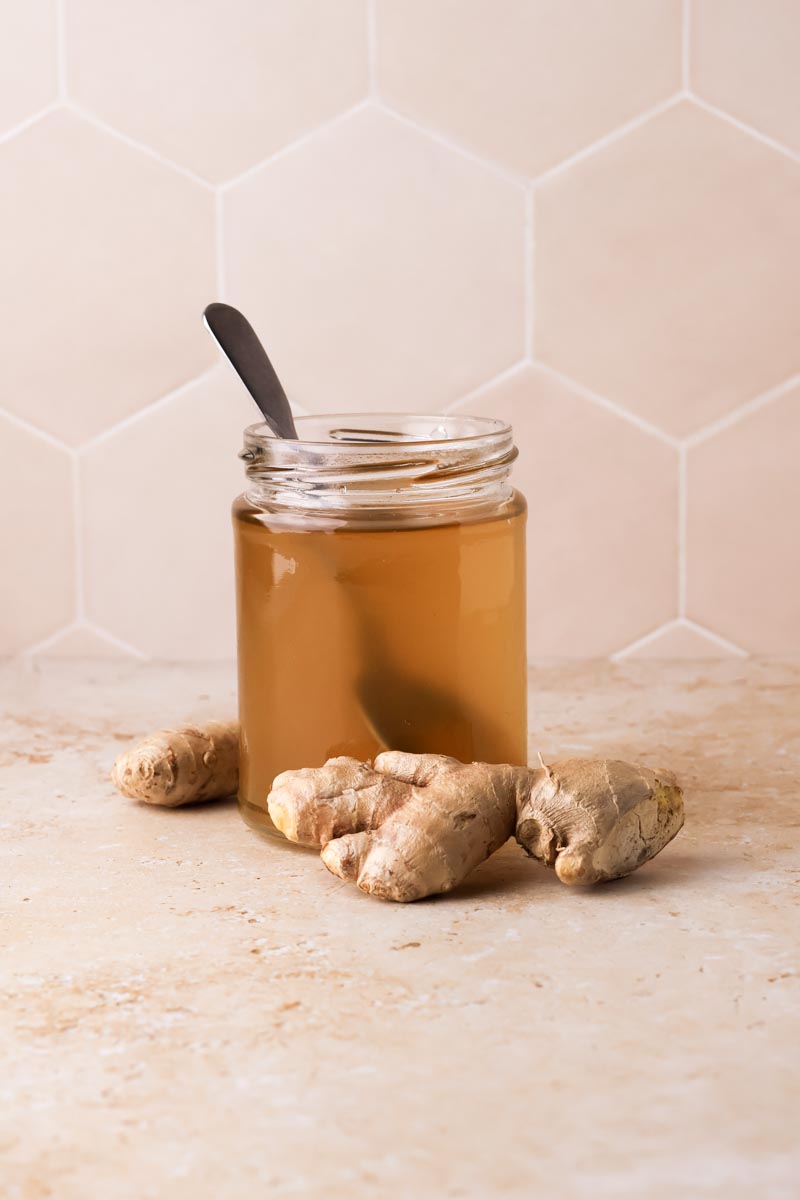
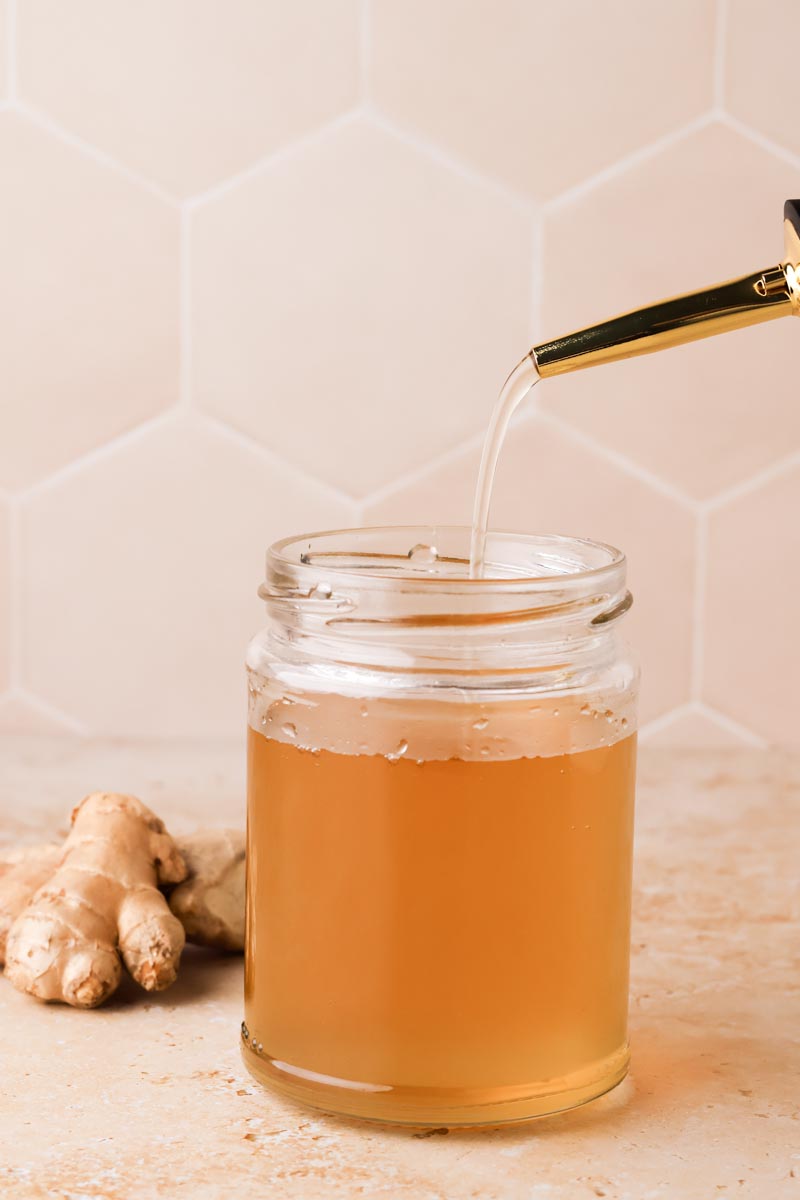
Stir in lemon juice if using, then strain through a fine mesh sieve pressing the ginger slices firmly. Transfer to a clean jar, leave uncovered until fully cool, then seal and refrigerate.
Tips when making ginger simple syrup
- Don’t skip the off-heat steep. Fifteen to twenty minutes of steeping after pulling the pan from the heat adds more flavor complexity than the cooking time itself. It costs nothing and the difference is immediately noticeable.
- The heat of the syrup varies with the ginger. Young ginger root produces a brighter, less aggressive heat; older, more fibrous root produces a sharper, more burn. Taste the ginger before you start and adjust the quantity slightly if it tastes very strong.
- Ground ginger as a substitute: if you genuinely have no fresh ginger, use 2 tsp ground ginger per cup of water and reduce the simmer time to three minutes. The flavor is flatter and more one-dimensional but workable in a cocktail. I’d consider it a last resort rather than an alternative.
- The ginger simple syrup gets spicier as it sits. Day one is warm and bright; by day three the heat has intensified slightly as the ginger compounds continue to develop in the cold syrup. Factor this in if you’re making it ahead for a specific cocktail.
Taste and flavor notes
- Sweetness: medium, warm, and rounded
- Primary note: fresh ginger, warming with a slow-building heat
- Secondary note: subtle earthiness from the brown sugar
- Overall profile: warming and layered
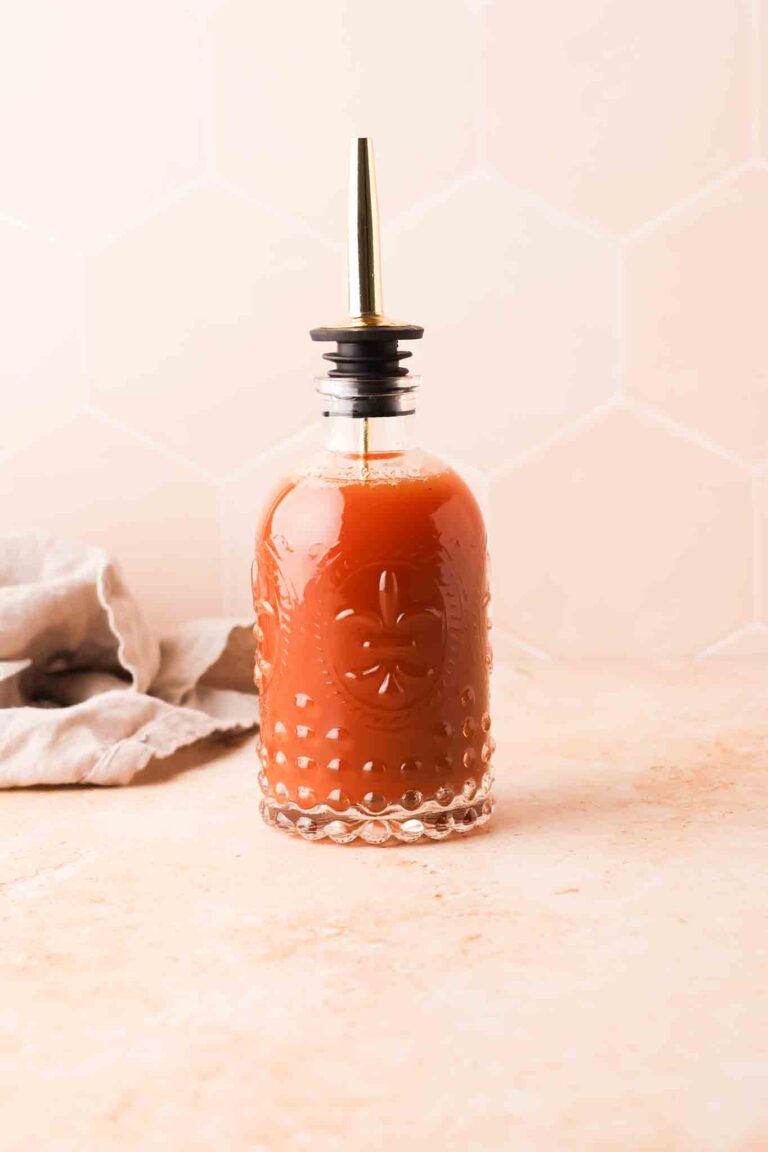
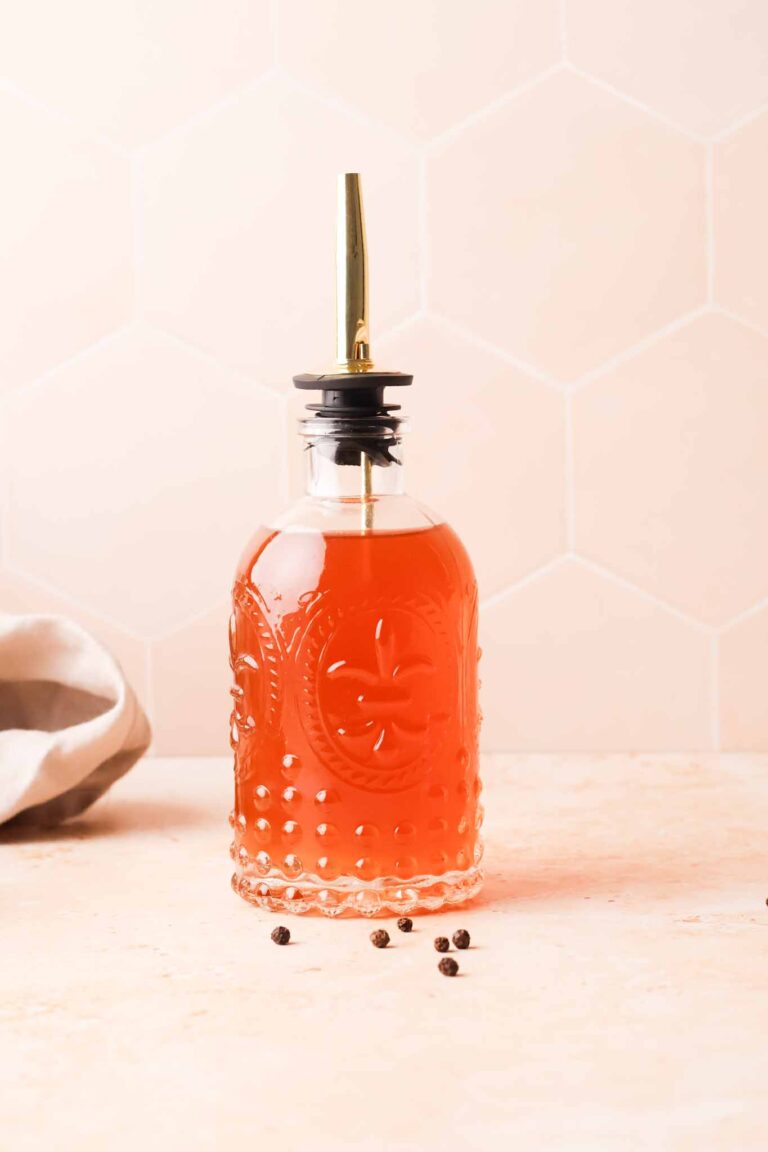
If you love the sharp heat here, chai simple syrup wraps ginger into a full warming spice blend that’s worth trying in lattes and cocktails. For something with a more subtle, layered heat, black pepper simple syrup brings complexity without the intensity.
Ginger simple syrup uses
- Ginger syrup cocktails – this is where ginger syrup earns its place most clearly. It works in a Moscow Mule or Dark and Stormy as a fresh ginger base, in a whiskey sour variation for warmth, in a gin and tonic for a spiced edge, or stirred into a rum cocktail where it lifts the whole drink. Much better than commercial ginger beer.
- Ginger beer and ginger ale syrup – dilute into sparkling water for a homemade ginger ale, or for something closer to ginger beer intensity. Add a squeeze of lime and a pinch of salt for the full experience. The stronger 2:1 ratio works better here as the dilution brings the sweetness back into balance and the extra ginger intensity survives the sparkling water.
- As ginger coffee syrup – add to an iced latte or cold brew. Ginger and espresso is a combination that works better than it sounds.
- Iced tea and lemonade – stir into tea for a ginger iced tea that’s more interesting than plain sweetened tea. In lemonade the ginger adds a spiced warmth that makes it one of my most-made summer drinks.
Storage and shelf life
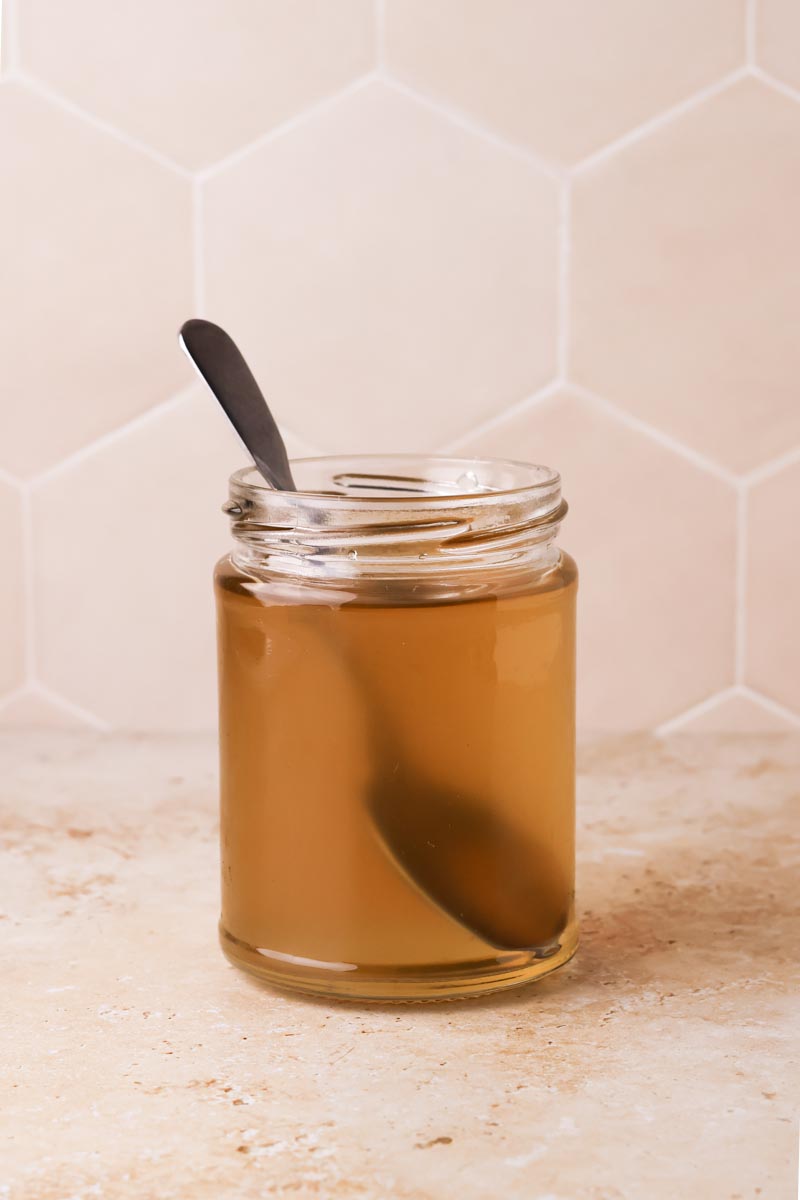
Homemade ginger syrup keeps well in a sealed glass jar in the refrigerator for up to 3 weeks. Unlike fruit syrups, ginger simple syrup actually improves with a few days of refrigeration. The heat mellows slightly from the sharp brightness of day one into something more rounded and complex by day 4 or 5, which is the version I prefer in cocktails.
The flavor stays consistent through day 14 and begins to fade gently after that, though it’s still usable through week three. If the syrup smells fermented rather than spicy on opening, or has developed any cloudiness or surface film, discard and make a fresh batch.
Ginger simple syrup variations
- Honey ginger syrup – replace both sugars with honey (reduce the water to 1/2 cup since honey adds its own liquid). Stir honey in off the heat rather than simmering it.
- Ginger and lemon syrup – add the peel of one lemon to the pan while simmering and increase the lemon juice off the heat.
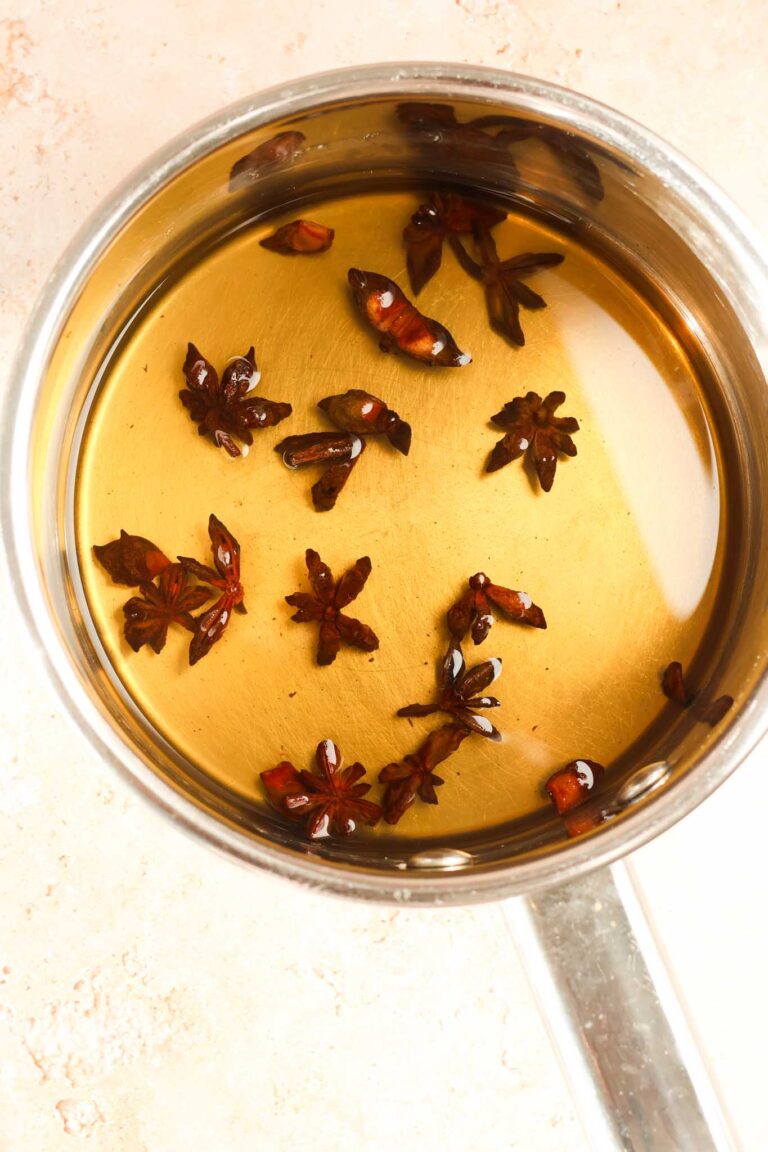
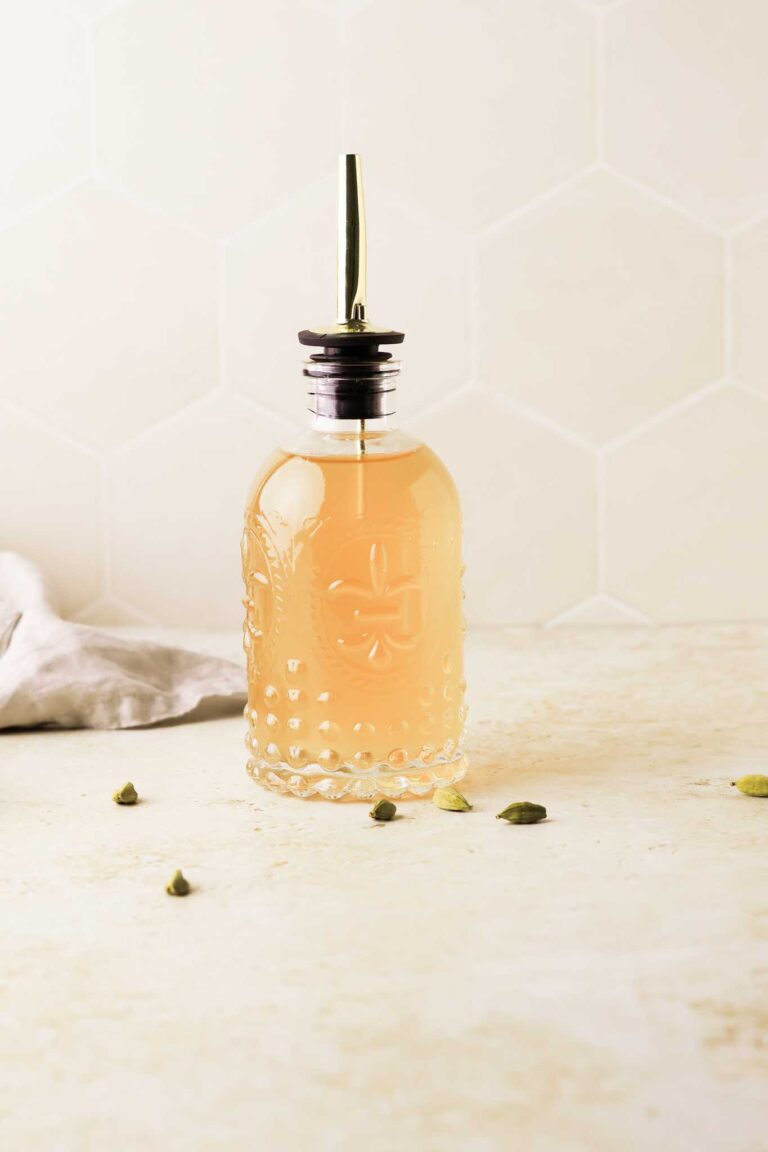
- Spiced ginger syrup – combine with cinnamon syrup, clove simple syrup, cardamom simple syrup alongside the ginger.
- Sugar free ginger syrup – substitute allulose in equal amounts for both sugars. The ginger flavor comes through cleanly and allulose gives the closest texture to the sugar version without any aftertaste.
Frequently asked questions
Can I use ground ginger instead of fresh?
You can, but the flavor is noticeably different and closer to gingerbread spice than fresh ginger. It’s workable in a cocktail but I’d go out of my way to use fresh. The whole point of homemade ginger syrup over a commercial version is the fresh ginger flavor.
How much ginger should I use per cup of water?
Use 3 to 4 oz (85 to 115g) of fresh ginger per cup of water for a syrup with noticeable heat and flavor. For a very intense syrup suited to ginger beer or strong cocktails, go up to 5 oz.
How do I make ginger syrup for ginger ale at home?
Use the stronger ratio of 2 cups total sugar to 1 cup water with 4 oz of ginger. Once the syrup is made and cooled, dilute 1 part syrup to 4 to 5 parts sparkling water. Add a squeeze of fresh lime and a pinch of salt. Taste and adjust the syrup quantity to your preference.
Equipment
- Small saucepan
- Wooden spoon or spatula
- Fine-mesh strainer or sieve
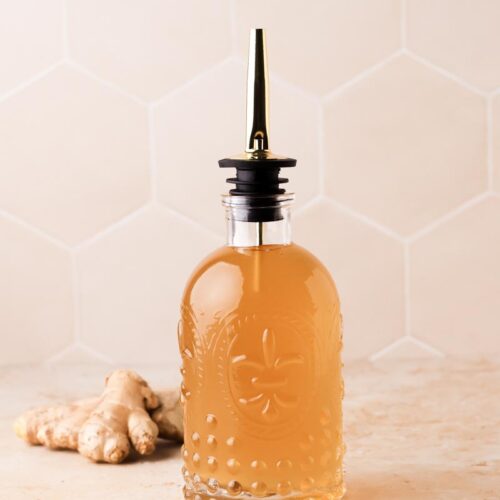
- Sterilized bottle or jar
Ingredients
- 2 medium fresh ginger root, washed and thinly sliced
- 1/2 cup white sugar
- 1/2 cup light brown sugar packed
- 1 cup water
- 1 tsp lemon juice optional
Instructions
- Wash and slice the ginger into thin coins, roughly 1/4 inch thick. Do not grate.
- Combine ginger slices, both sugars, and water in a small saucepan over medium heat. Stir gently until the sugars dissolve.
- Bring to a gentle simmer and cook for 8 to 10 minutes. Do not boil hard.
- Remove from heat and steep for 15 to 20 minutes. Do not skip this step.
- Stir in lemon juice if using. Strain through a fine mesh sieve pressing the ginger slices firmly.
- Transfer to a clean jar. Leave uncovered until fully cool before sealing and refrigerating.
Notes
Did you make this recipe?
Please take a moment to leave a comment and provide a star rating below. You can also share your creation on Instagram and tag @mysyruparchive – Thank you for your feedback!

Welcome! I’m Rakiya, a syrup enthusiast with years of experience developing flavors. Every recipe is tested and refined for tasty results. My tips, variations and photos come directly from my kitchen experiments.