Butterfly Pea Flower Simple Syrup
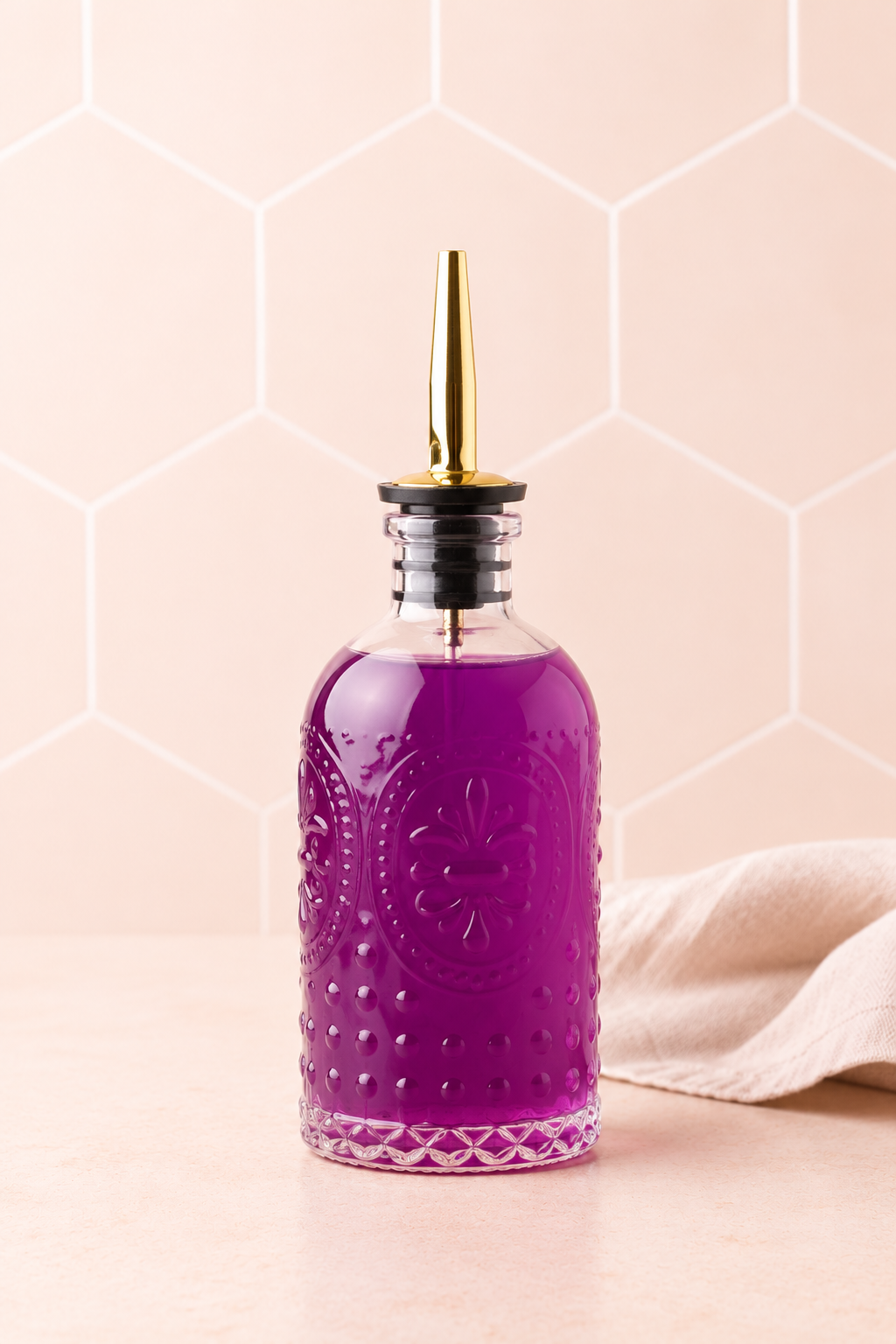
This butterfly pea simple syrup is made from dried butterfly pea flowers steeped in a plain sugar base, and the result is a deep, inky blue simple syrup that turns purple or pink the moment it contacts anything acidic. Use it in lemonade, iced tea, and matcha where the color shows best.
It is one of those ingredients that genuinely surprises people the first time they see it work. Pour it into a lemonade and squeeze a wedge of lime over the glass and the whole drink shifts color in real time.
How I developed this recipe
I started testing this after seeing butterfly pea flower drinks circulating widely without a clear explanation of how the color change actually works or what the flower genuinely tastes like in a finished drink. Similar to my green tea simple syrup, I worked through similar flower-to-water ratios and two steeping methods before arriving at what works most consistently.
Syrup ratio
The base is a standard 1:1 ratio, 1 cup white sugar to 1 cup water. Butterfly pea flowers are dried and do not absorb water the way something like nuts do. A 1:1 base produces a syrup that is fluid enough for any application while concentrated enough that the color carries through visibly when added to a glass.
Four tablespoons of flowers per 1 cup of water is the sweet spot for color and flavor balance. At one tablespoon the blue is pleasant but not vivid. At three tablespoons the earthy, slightly grassy flavor becomes noticeable in delicate drinks like lemonade. Two tablespoons gives a deep, saturated blue without the flavor becoming the main event.
Get exact sugar, water, and yield amounts for any ratio — 1:1, 2:1, or 1:2 — in grams, ounces, or cups.
Use the simple syrup calculator →How does butterfly pea change color?
Butterfly pea flowers contain anthocyanins, the same pigment family found in blueberries and red cabbage, which respond to pH. In neutral water they read blue. Add an acidic ingredient like lemon or lime and the pH drops, shifting the color toward purple and then pink depending on how much acid is used.
A teaspoon of lemon juice over a glass turns a blue drink vivid purple. A full squeeze pushes it toward reddish-pink. This happens visibly and quickly, which is the moment that makes this butterfly pea simple syrup worth photographing and filming.
Espresso and brewed coffee are mildly acidic, sitting roughly between pH 4.5 and 5.5. This means the syrup will shift slightly in a coffee drink, though the effect is less dramatic and less reliable than a clean citrus trigger.
The blue is still beautiful in a matcha latte or a plain iced latte where it pools at the bottom before mixing, but if the color change visual is the goal, lemonade and iced tea are the better vehicles.
Ingredients
- Dried butterfly pea flowers – the ingredient that requires the most sourcing effort but is widely available online. Look for dried whole flowers or powder. Asian grocery stores sometimes carry them as a tea ingredient labeled as blue pea flower tea.
- Granulated white sugar – white sugar is the better one for this syrup. Brown sugar produces a murkier, olive-toned syrup that mutes the blue completely. Do not substitute.
- Water – filtered or plain
- Lemon juice – it helps the syrup stay fresh longer
- Optional: 1/4 tsp pure vanilla extract – added off heat. It softens the earthiness of the butterfly pea flowers and makes the syrup feel warmer and more rounded, which is particularly helpful when using it in lattes or matcha.
How to make butterfly pea simple syrup
Add the dried butterfly pea flowers or powder, sugar, and water to a small saucepan over medium heat. If using flowers, the water will begin turning blue in about 30 seconds. It happens faster than you expect and the color is immediately vivid.
Stir until the sugar dissolves, about 2 to 3 minutes, then reduce to medium-low and let the syrup simmer gently for 5 to 7 minutes. With powder, take it off the heat as soon as the sugar dissolves.
Keep the heat at a gentle simmer throughout. Boiling degrades the flowers faster than gentle heat, which produces a less vivid color and can make the earthy flavor sharpen slightly. Small bubbles at the edges of the pan are okay.
Remove from heat and stir in lemon juice and vanilla extract if using. Let the syrup cool for about 10 minutes before straining through a fine mesh strainer into your storage jar. Press the flowers gently to extract the remaining liquid.
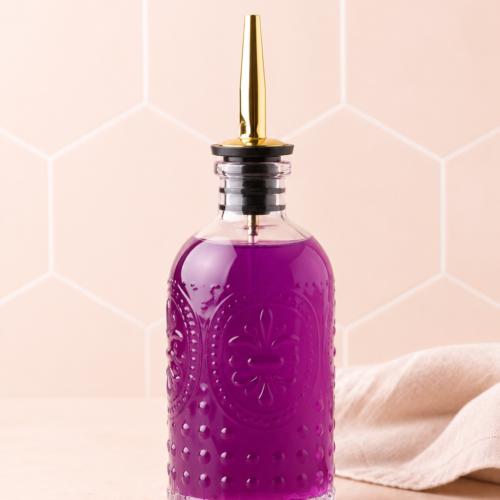
Butterfly pea flowers release most of their pigment freely during simmering, so pressing here is about capturing the last of the liquid. The syrup in the jar will be a deep, clear indigo blue.
Testing notes & tips
- Flower quality has a significant impact on color intensity. Fresh, high-quality dried butterfly pea flowers produce a vivid saturated blue. If your butterfly pea syrup comes out looking more gray than blue the flowers are likely old or from a poor source.
- Keeping the syrup in the jar blue and adding acid at the glass gives you more creative flexibility than pre-acidifying the whole batch. You can serve the blue version to some drinks and trigger the purple for others, and you can show the color change to guests rather than presenting a finished purple syrup with no reveal moment.
- The syrup looks darker and more intense in the jar than it does in a finished drink. When diluted through a full glass of liquid the color lightens to a soft lavender or periwinkle, which photographs beautifully.
Taste and flavor notes
- Sweetness: clean and neutral. Identical to a plain simple syrup in sweetness.
- Primary note: lightly floral and herbal, comparable to a mild violet or a very gentle chamomile.
- Secondary note: a subtle earthiness with a slightly woody finish, not very noticeable in some drinks
- Overall profile: Delicate and mostly neutral. Functions primarily as a sweetener, the color is the main event.
Butterfly pea simple syrup uses
- Color-changing lemonade – the application where this butterfly pea simple syrup is most at home. Add some of the blue syrup to a glass of ice, pour lemonade over it, with a squeeze half a lemon or lime directly into the glass to boost color. This is the recipe most people come here for.
- Blue matcha latte – add ice to a cup, follow with the syrup, add your milk then add whisked matcha to top. A beautiful contrast before mixing.
- Butterfly pea iced tea – this is the most traditional use of butterfly pea flowers, common across Southeast Asia, and the one where the flavor reads most clearly as intended.
- Sparkling water or mocktail – the carbonation makes the color change even more visually dynamic because the bubbles distribute the color shift throughout the glass faster.
- Blue iced latte – the blue pools beautifully before mixing and creates a layered effect in a clear glass. The color will shift slightly toward purple or lavender shade as the mildly acidic coffee contacts the syrup.
- Cocktails – works as a color and sweetness element in gin-based cocktails, vodka lemonade, and sparkling wine drinks. The color change is particularly dramatic in a gin and tonic where the tonic’s acidity triggers the purple shift immediately.
Storage & shelf life
Homemade butterfly pea flower syrup has no protein or fat content after straining, so it keeps as well as a plain simple syrup for 3 weeks. The color remains vivid throughout the shelf life when stored correctly.
Freezing works well. Pour into an ice cube tray, one cube per tablespoon, and freeze for up to 3 months. The color holds well through freezing and thawing. Drop a cube directly into a glass of lemonade and watch it slowly change color as it melts.
The syrup should smell clean and faintly floral when you open the jar. Any off smell is the signal to discard it and start a fresh batch.
Butterfly pea syrup variations
- Lavender butterfly pea simple syrup – add dried culinary lavender to the saucepan along with the butterfly pea flowers.
- Honey butterfly pea – replace white sugar with mild honey and reduce the water. Honey is slightly acidic and may shift the color from pure blue toward blue-violet in the jar.
- Ginger butterfly pea simple syrup – add slices of fresh ginger to the saucepan during simmering.
- Butterfly pea and rose – add dried culinary rose petals to the saucepan alongside the butterfly pea flowers.
FAQs
Where can I buy butterfly pea flowers?
They are not commonly stocked in regular grocery stores but are widely available online. Asian grocery stores often carry them as a tea ingredient, sometimes labeled as blue pea flower tea. Specialty tea shops are also reliable.
Will the color change work in coffee?
Partially. Coffee and espresso are mildly acidic, typically between pH 4.5 and 5.5, which is acidic enough to trigger a subtle color shift from blue toward blue-purple. The effect is less dramatic and less reliable than a citrus trigger.
Is the butterfly pea syrup color change permanent?
Yes, once triggered.
Are butterfly pea flowers okay to eat?
Yes. Butterfly pea flowers have been used as a food colorant and herbal ingredient in Southeast Asian cooking for centuries.
Equipment
- Small saucepan
- Fine-mesh strainer or sieve
- Glass bottle or jar
Ingredients
- 4 tbsp dried butterfly pea flowers or 2 teaspoon powder
- 1 cup granulated white sugar
- 1 cup water
- Optional: 1/4 tsp pure vanilla extract added off heat
- 1 tbsp lemon juice
Instructions
- Combine butterfly pea flowers, sugar, and water in a small saucepan over medium heat.
- Stir until the sugar dissolves completely, about 2 to 3 minutes. The water turns deep blue almost immediately.
- If you are using the powder version, take it off heat from here.
- Reduce to medium-low and simmer the flowers gently for 5 to 7 minutes. Do not boil.
- Remove from heat. Stir in vanilla extract if using.
- Cool for 10 minutes, then strain through a fine mesh strainer, pressing the flowers gently.
- Cool completely, then seal and refrigerate.
- To trigger the color change: add a squeeze of fresh lemon or lime directly in the glass after pouring the syrup.
Notes
Did you make this recipe?
Please take a moment to leave a comment and provide a star rating below. You can also share your creation on Instagram and tag @mysyruparchive – Thank you for your feedback!
Welcome! I’m Rakiya, a syrup enthusiast with years of experience developing flavors. Every recipe is tested and refined for tasty results. My tips, variations and photos come directly from my kitchen experiments.