Simple Syrup Calculator
The ratio you choose changes everything. Use this simple syrup calculator to get exact sugar, water, and yield amounts for a 1:1, 2:1, or 1:2 ratio – in grams, ounces, or cups
Simple syrup calculator
Tip: For a 1:1 syrup, combine equal parts sugar and water by weight, heat on medium stirring until the sugar fully dissolves. Do not boil. Cool before bottling. Keeps refrigerated for up to 4 weeks.
Why use a simple syrup calculator?
Ratios change everything
A 1:1 and a 2:1 syrup behave completely differently — one dilutes, the other sweetens without adding volume. Eyeballing it leads to batches that are too thin, too sweet, or that crystallize before you use.
Yield isn’t what you’d expect
Syrup yields less than the sum of its parts — sugar occupies space within the water rather than adding to it. Knowing your output lets you plan storage and recipe volumes upfront.
Scaling up by hand is error-prone
Doubling or tripling a recipe while switching between grams, ounces, and cups is where mistakes creep in. Enter your amount once and the math is handled by the syrup calculator.
Same result every batch
Precise measurements mean your syrup performs the same whether you’re making cocktails, glazes, or lemonade — no more tweaking because last week’s batch tasted different.
The math behind simple syrup calculator
Simple syrup ratios are always expressed as parts sugar to parts water, measured by weight rather than volume for best accuracy.
- 1:1 simple syrup — one gram of sugar for every gram of water. This is the standard ratio used in most cocktail recipes and coffee shops. It dissolves easily, stores well for up to four weeks refrigerated, and adds gentle sweetness without dominating a drink.
- 2:1 rich syrup — two grams of sugar for every gram of water. Twice the sweetness in half the volume. Because you’re adding less liquid to your recipe, rich syrup is preferred when you want to sweeten without diluting — common in spirit-forward cocktails like an Old Fashioned or a Daiquiri. It also keeps longer, up to six weeks, because the higher sugar concentration inhibits microbial growth.
- 1:2 light syrup — one gram of sugar for every two grams of water. A gentler sweetener, useful for poaching fruit, making flavored sodas, or sweetening drinks for people watching their sugar intake.
Why the yield is less than the sum of the parts: when sugar dissolves into water, the sugar molecules occupy space within the water structure rather than simply adding to it. A 1:1 batch made with 200g sugar and 200g water yields roughly 320ml of syrup, not 400ml. This sugar syrup calculator accounts for that, giving you an accurate yield estimate so you can plan your storage containers and recipe volumes properly.
Getting accurate results
Weigh your ingredients
A cup of sugar can range from 190g to 240g depending on how it’s packed. A scale eliminates that variable entirely.
Cool completely before bottling
Sealing warm syrup traps steam, which dilutes the batch and shortens shelf life.
Don’t boil
Simmer gently and stir until the sugar dissolves. Boiling drives off water, throwing off your ratio and risking crystallization.
Label everything
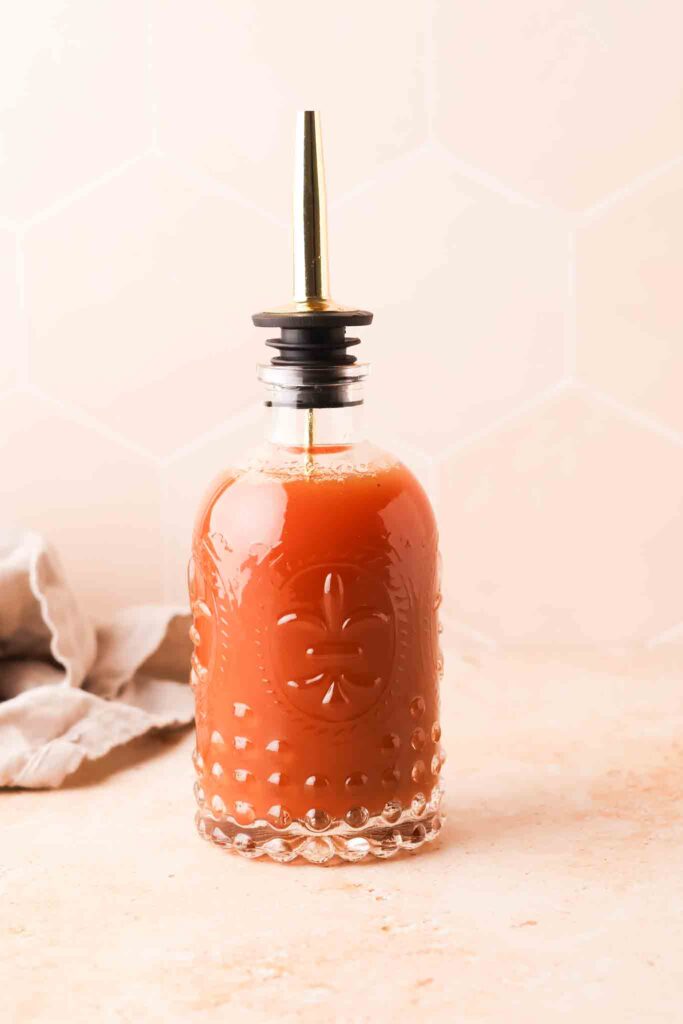
1:1 and 2:1 syrups are identical in a bottle. Write the ratio and date before you forget.
Related syrup conversions
- Sugar syrup for beekeeping: Beekeepers use sugar syrup to supplement feeding during nectar dearths or to help new colonies build comb. A 1:1 sugar-to-water syrup (by weight) is used in spring to stimulate brood rearing, while a 2:1 ratio is used in fall to help bees build winter stores. This calculator works for both — just enter your sugar weight and select the appropriate ratio.
- Sap to syrup: Maple sap and simple syrup are different products — maple sap requires boiling down rather than dissolving — but if you’re sweetening a recipe with maple syrup instead of simple syrup, the general substitution is to use three-quarters the amount of maple syrup and reduce the other liquids in your recipe slightly to compensate for the extra moisture.
- Limoncello simple syrup ratio: Traditional limoncello uses a 1:1 simple syrup added to infused grain alcohol. Some recipes call for a slightly lighter syrup to let the lemon flavor come through more clearly. Use this calculator to batch your syrup precisely, then adjust the syrup-to-spirit ratio to taste.