Blueberry Simple Syrup For Coffee
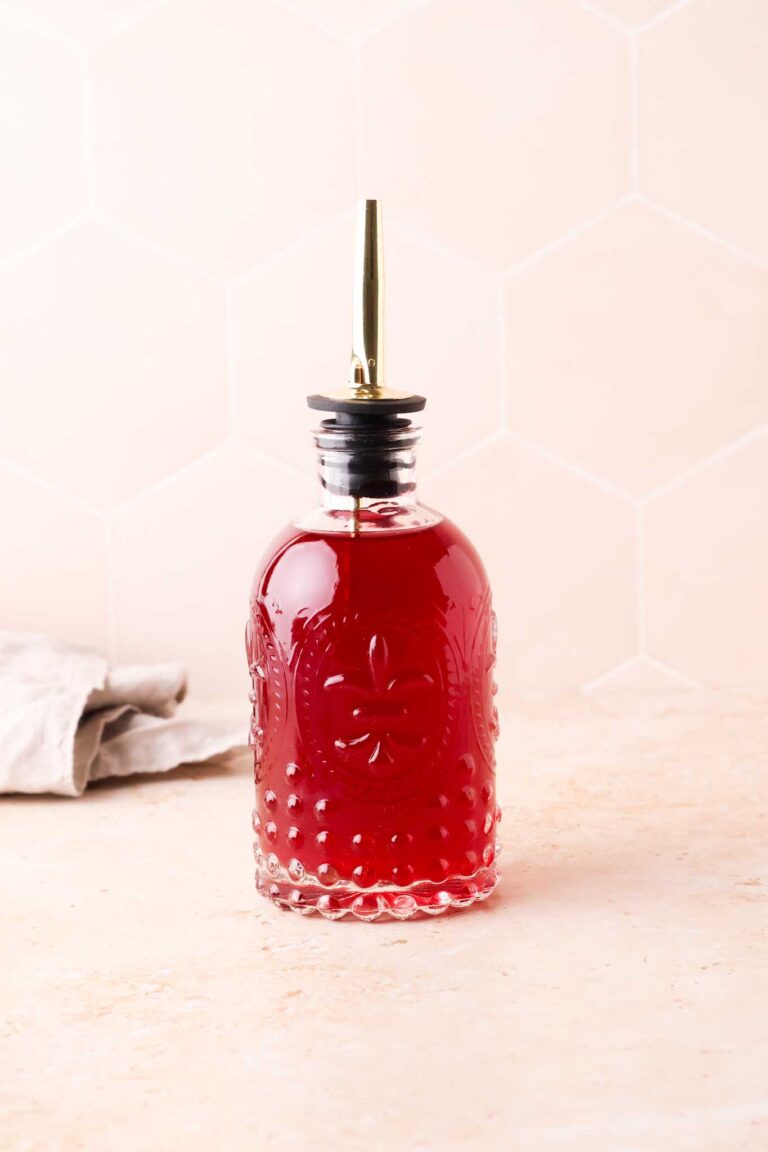
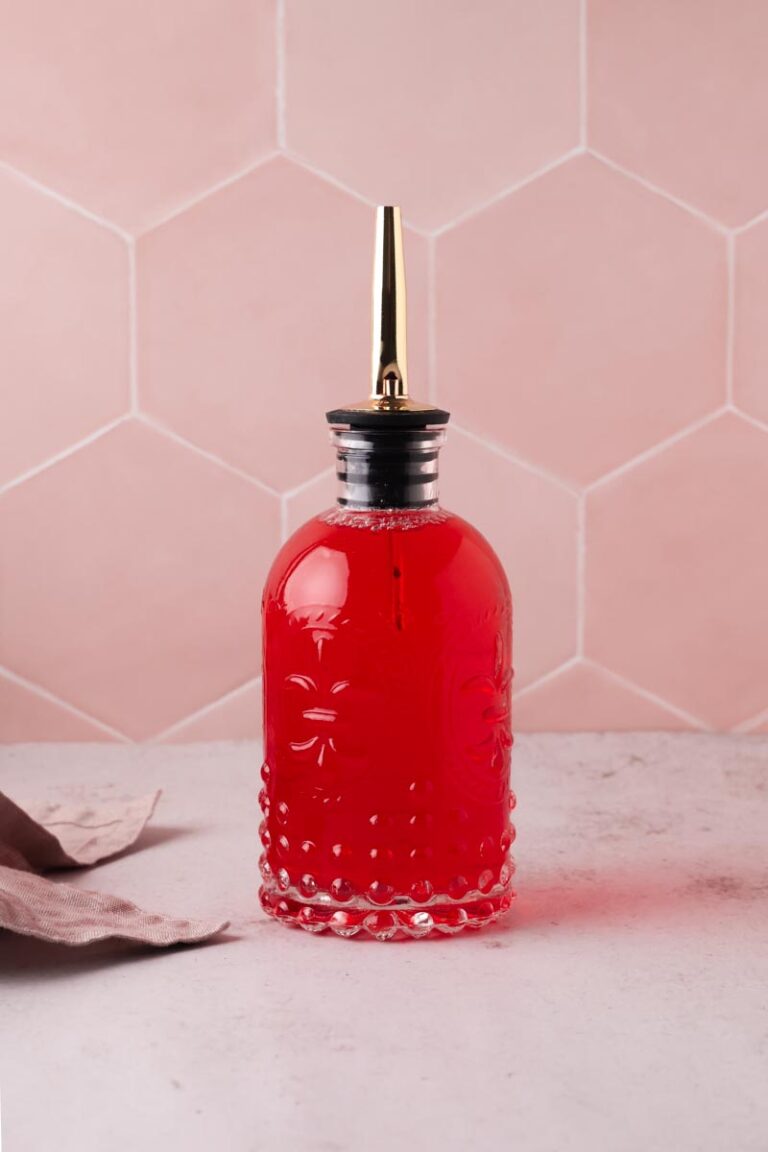
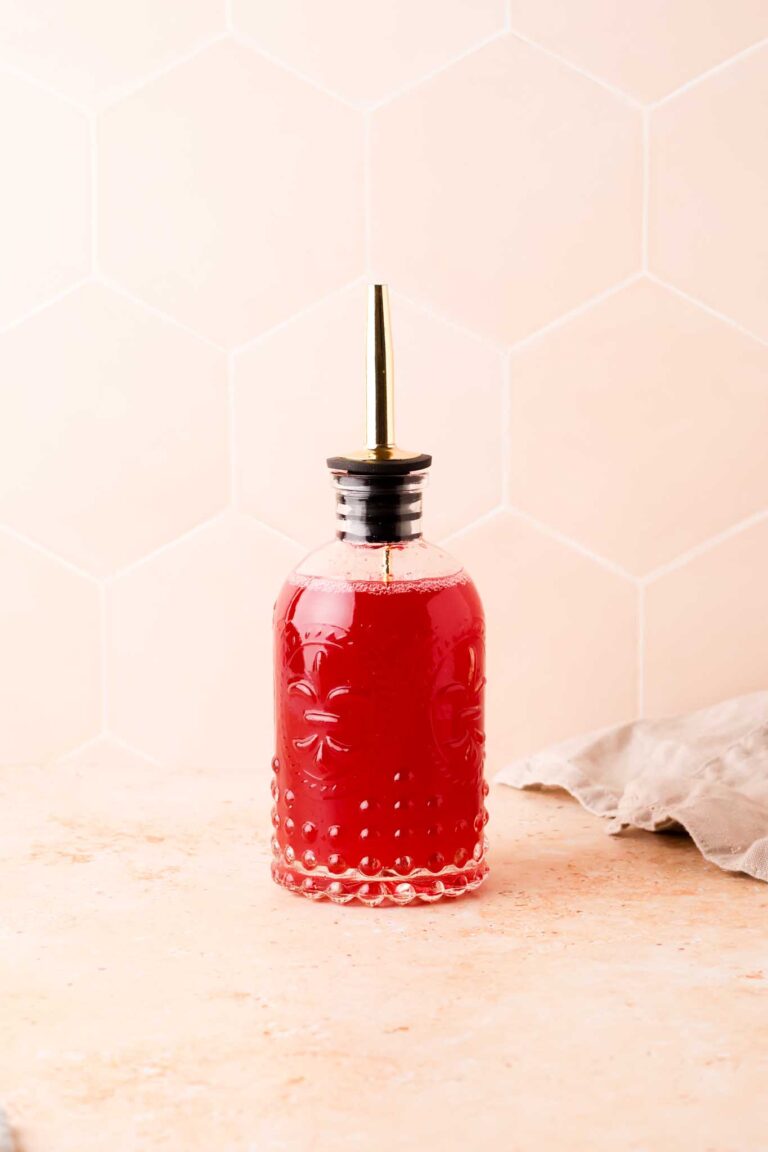
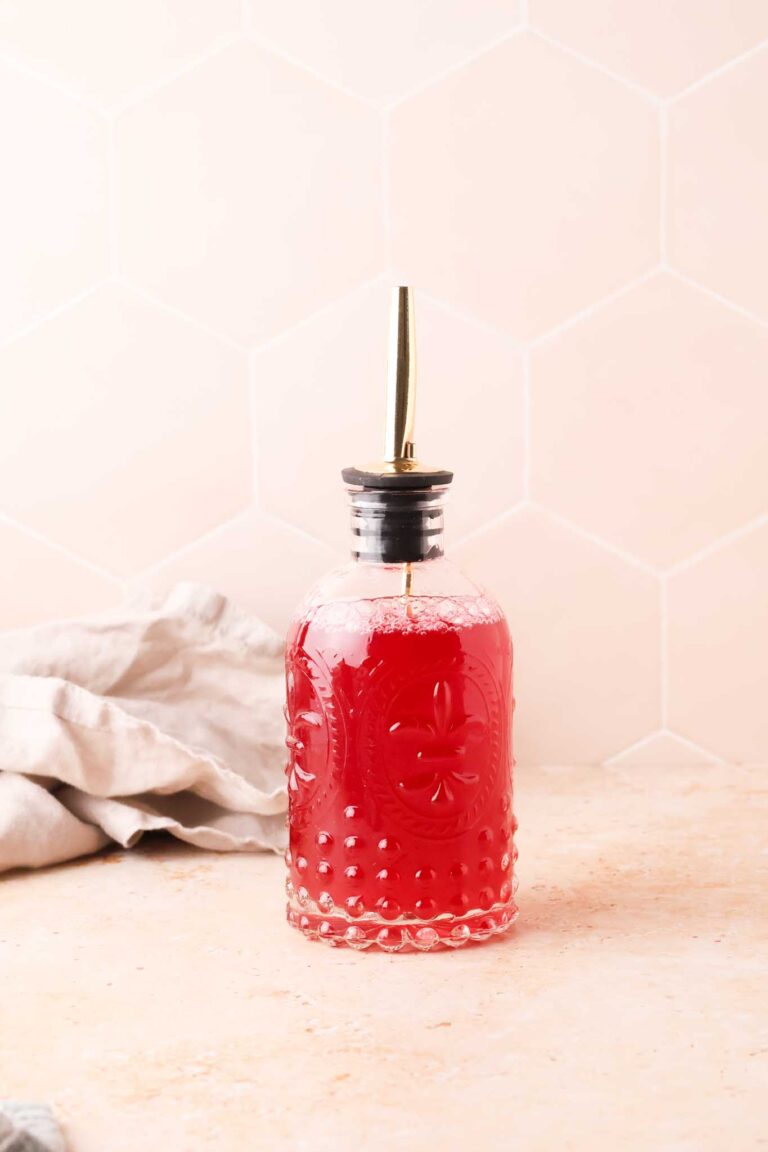
This blueberry simple syrup for coffee is the easiest way to elevate your morning latte or matcha. With just three ingredients and 10 minutes of prep, you’ll have a versatile syrup perfect for drinks, desserts, and more.
Blueberries don’t have the sharp tartness of raspberry or the earthy depth of blackberry, they sit somewhere in between, with a mellow sweetness and a faintly floral note that makes them surprisingly versatile.
How I settled on this recipe
For a blueberry simple syrup for coffee, white sugar was the clear winner for it. I settled on cooking the berries altogether with the simple syrup and that added dramatically more flavor from the cooked method.
Blueberry simple syrup ratio for coffee
Blueberries are naturally mild and sweet, so a 1 to 1 gives you enough sugar to carry the flavor without tipping into overly sweet. This formula dissolves quickly in coffee and latte, and has just enough body to cling lightly to pancakes too. If you want to understand how ratio affects the final texture and use, my simple syrup ratio guide covers it properly.
For a thicker blueberry simple syrup for pancakes, use 2 cups sugar to 1 cup water. The consistency shifts noticeably as it pours more slowly and pools on a plate rather than running off. The stronger ratio is too sweet in an iced coffee but exactly right drizzled over a waffle.
Ingredients for blueberry simple syrup
- Fresh or frozen blueberries – both work well and I use them interchangeably depending on what I have. Fresh blueberries in peak season give a slightly brighter, more fragrant berry syrup. Frozen blueberries release more juice immediately on heating and produce a deeper, more consistent color year-round.
- White sugar – white sugar is non-negotiable here if you want the blueberry to come through clearly. I covered exactly why sugar choice matters, but the short version is that white sugar brings no flavor of its own, which is what you want when the berry is this delicate.
- Water
- Lemon juice – blueberries are mild enough that a small amount of acid lifts the whole syrup. It doesn’t make it tart, it just makes it taste more like blueberry.
How to make blueberry simple syrup for coffee
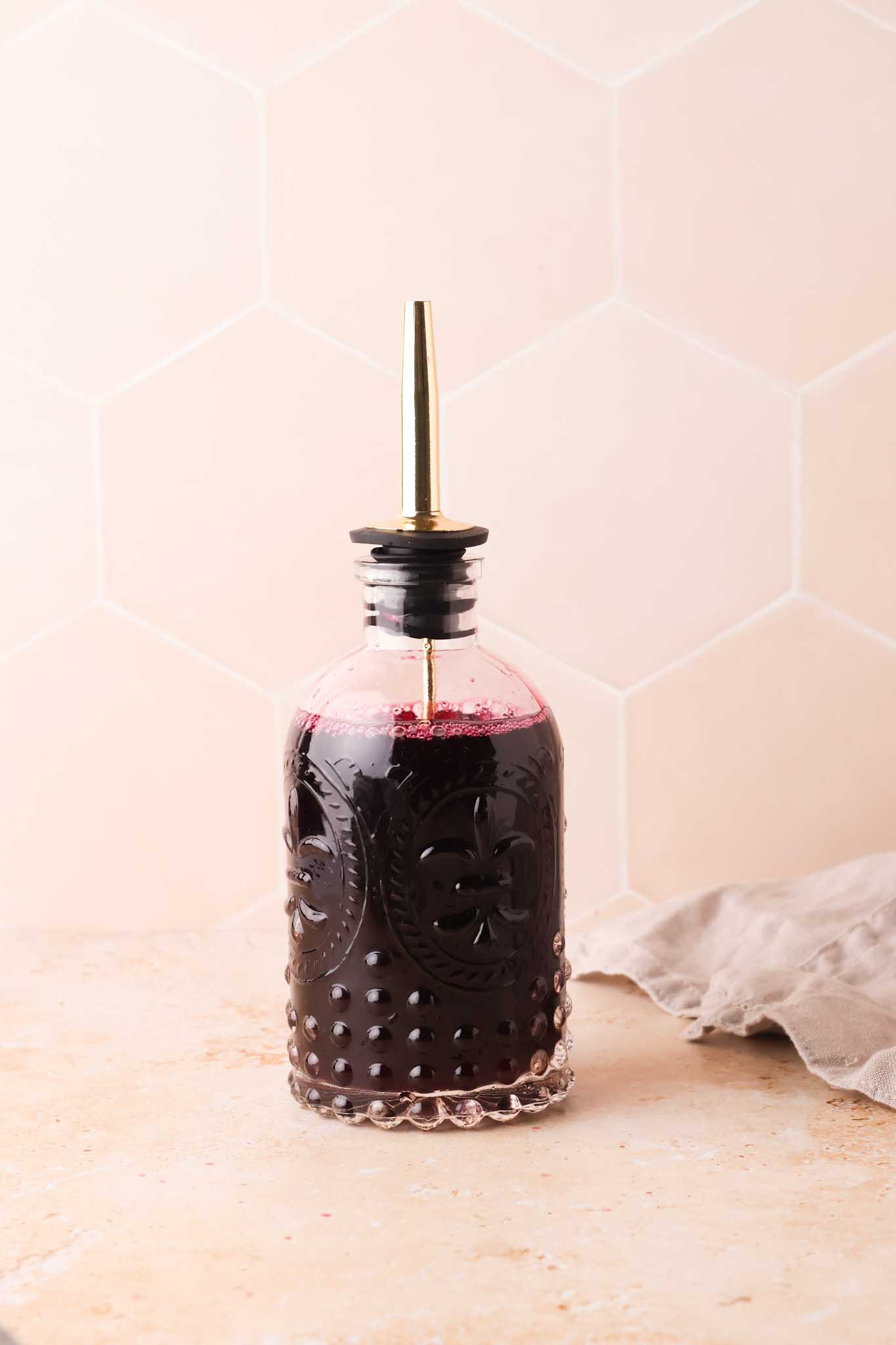
Add the blueberries, sugar, and water to a small saucepan over medium heat. Blueberries don’t collapse dramatically or release a flood of juice in the first minute. Give them time. Stir gently and within two to three minutes they’ll start to soften, the skins will begin to split, and the liquid will shift from pale blue-grey to a deep, vivid purple.
Bring to a gentle simmer and cook for five to six minutes until the berries are completely soft and the syrup looks glossy and richly colored. The temptation here is to go harder on the heat to speed things up but don’t. Blueberries have a delicate, slightly floral aroma that cooks off quickly at high heat, and a batch rushed to a boil tastes noticeably flatter than one brought up slowly. I learned this by accident and it’s been a gentle simmer only ever since.
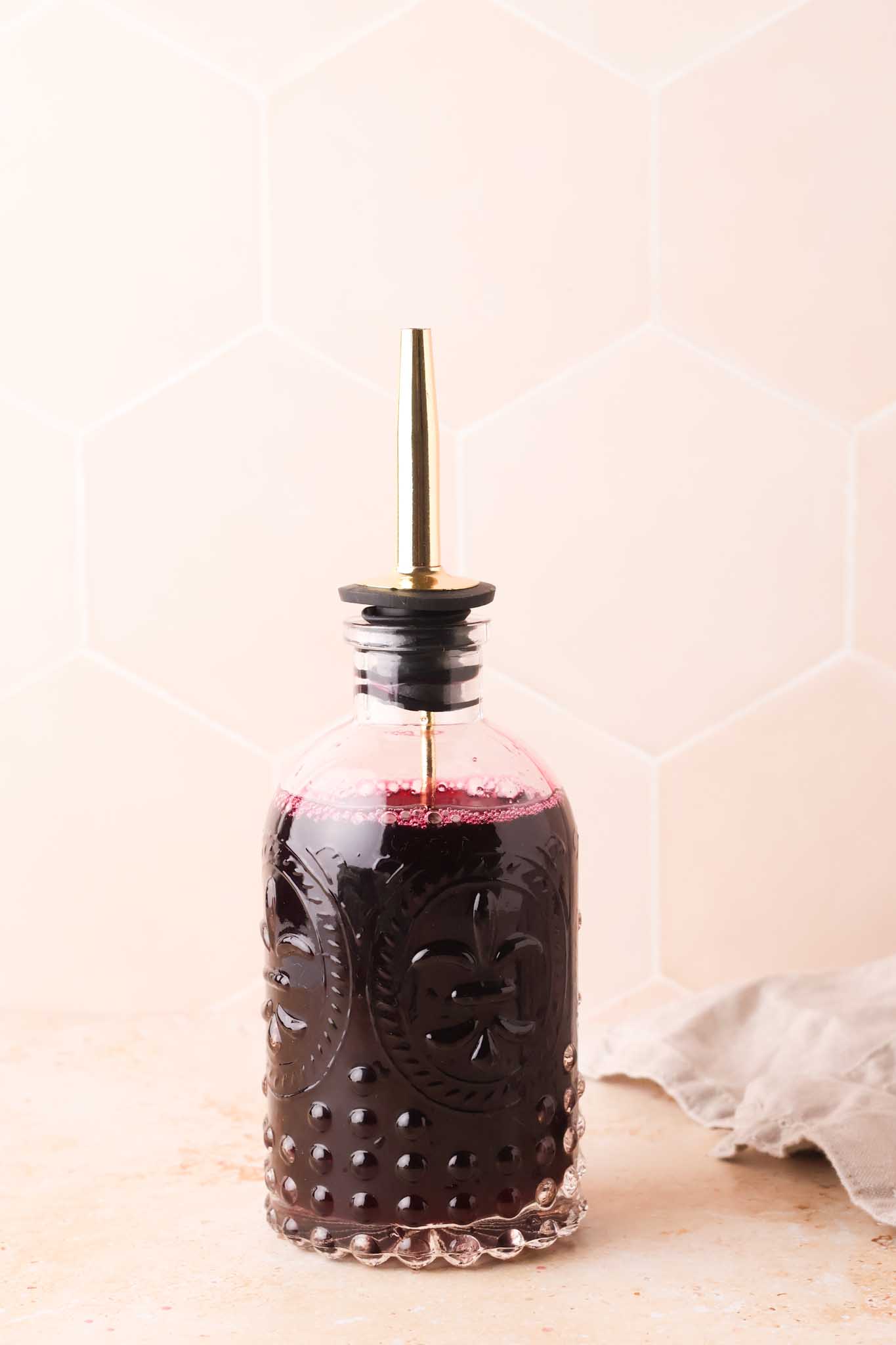
Pull it off the heat, rest for five minutes, then strain through a fine mesh sieve pressing the solids firmly. The skins hold a lot of color and flavor, press them properly and you’ll get a deeper, more intense syrup than if you let it drain passively. Stir in lemon juice, then leave the jar uncovered until fully cool before sealing and refrigerating.
Tips from testing
- Frozen blueberries give a more consistent deep purple color than fresh. If you’re making this for a drink where the color matters like a sparkling water, mocktail or a cocktail – frozen is the more reliable choice.
- Press the skins hard when straining. The skins hold a disproportionate amount of both color and flavor. I use the back of a spoon in a firm circular motion and get noticeably more yield and a darker syrup than passive draining.
- The lemon juice makes a bigger difference here than in any other berry syrup I make. Blueberry is mild enough that without it the syrup can taste a little flat. It’s not optional in my kitchen.
- Don’t rush the heat. The floral note in blueberry is volatile and the first thing to go at high temperature. Gentle simmer, always.
Blueberry simple syrup taste and flavor notes
- Sweetness: medium, soft, and mellow
- Primary note: fresh blueberries, sweet with a mild jammy quality
- Secondary note: a faint floral edge that disappears if you overheat it
- Overall profile: soft, rounded, and versatile
For a deeper, jammier richness in a similar dark berry direction, blackberry syrup is a natural next step. If you want something that captures a wider range of berry flavor, mixed berry syrup is the easy all-rounder.
Blueberry simple syrup uses
- As blueberry coffee syrup: blueberry and espresso is a combination that surprises most people the first time and converts them permanently the second. Use this to make a iced blueberry latte or blueberry matcha drink.
- For pancakes and waffles: the blueberry simple syrup has a better consistency for desserts. It pours slowly, pools in the valleys of a waffle, and clings to a stack in a way the standard ratio doesn’t.
- For lemonade: the citrus and berry work together naturally. This is the combination I come back to most in summer.
- Cocktails and mocktails: it works well in a blueberry gin and tonic, a blueberry vodka lemonade, or as the sweetener in a blueberry whiskey sour. The softness of the berry means it blends into a cocktail rather than dominating it. Use it to make mocktails and non-alcoholic drinks.
- Iced tea: stir a tablespoon into black or green iced tea. Works similarly to the way strawberry syrup does in tea , just fruity and sweet without being sharp.
Storage and shelf life
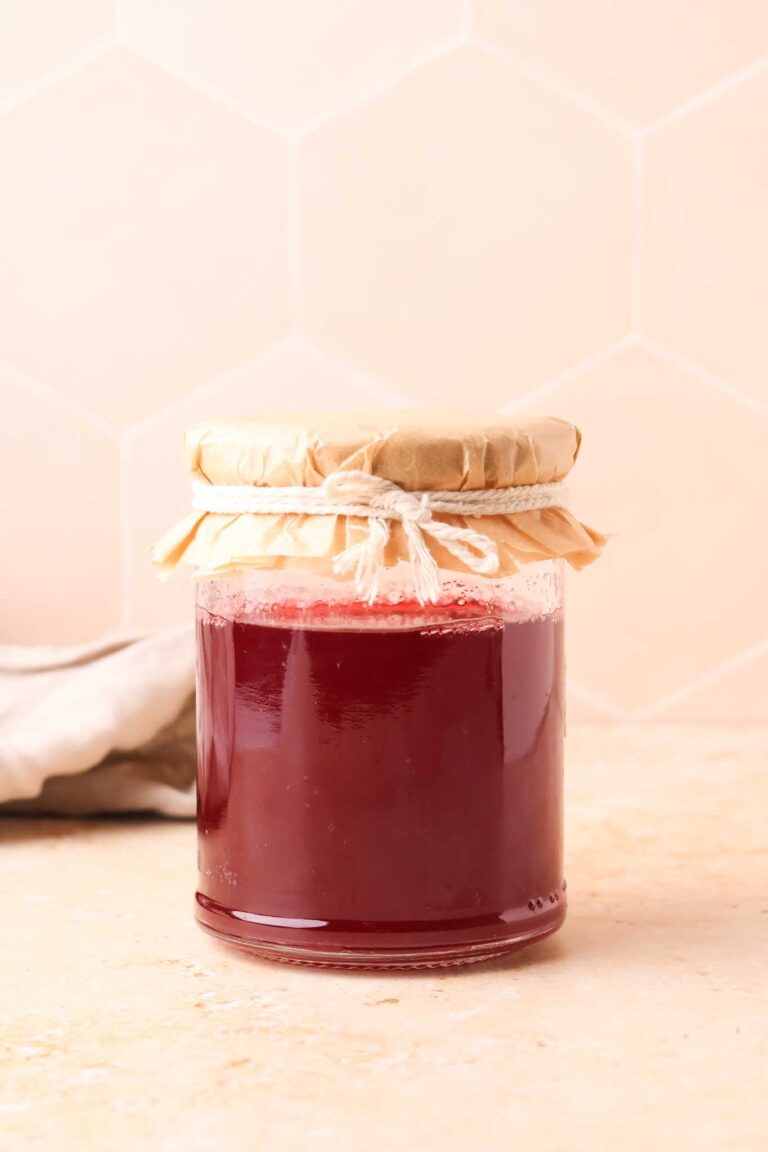
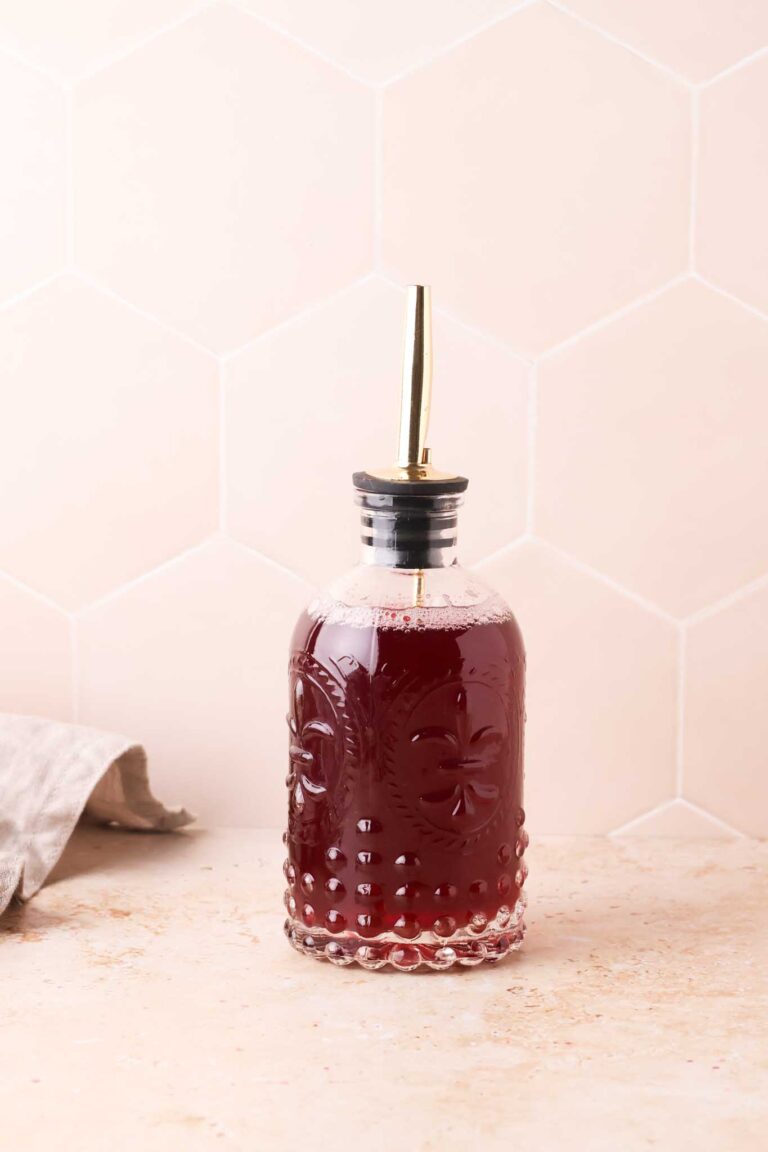
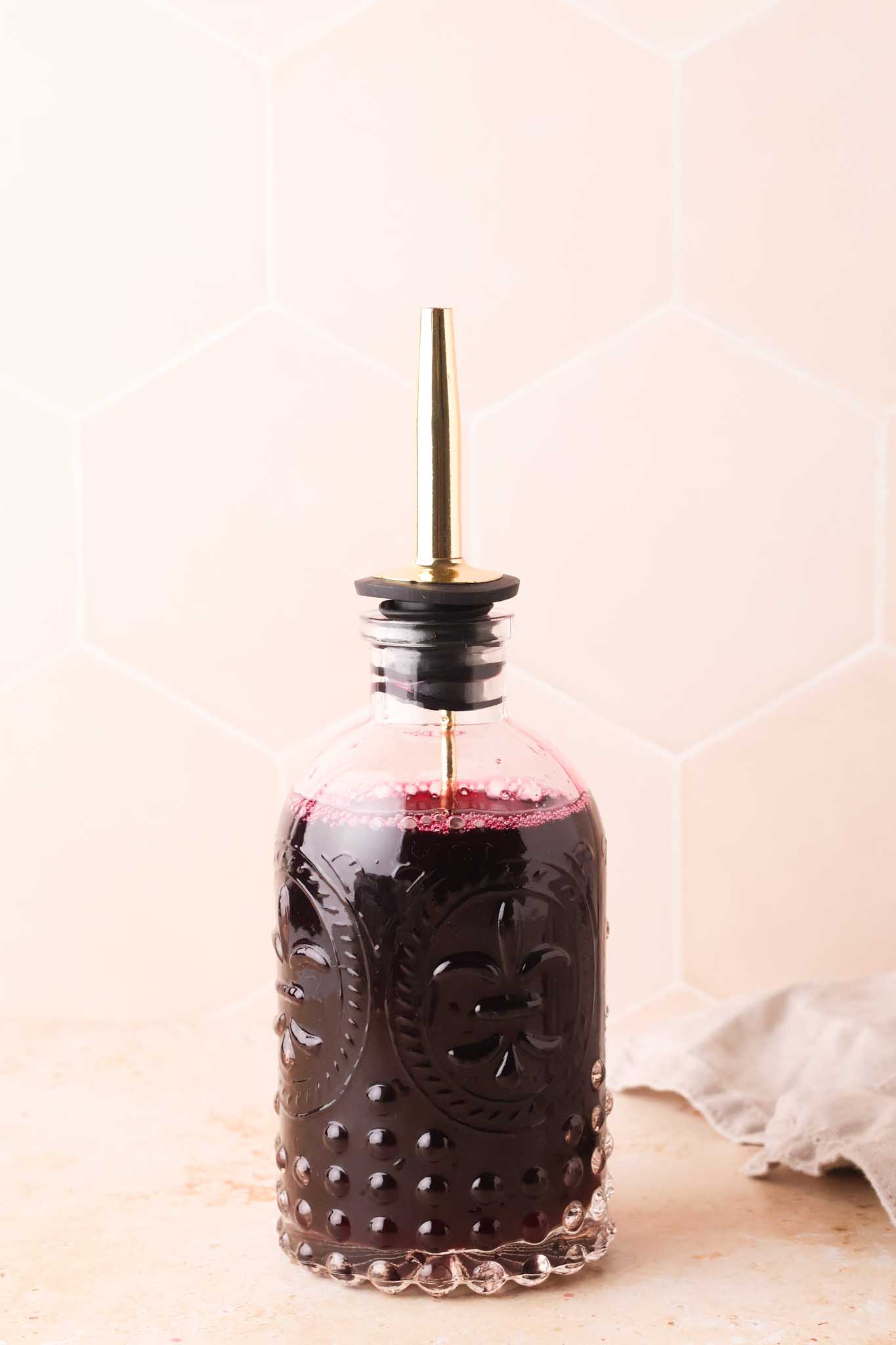
Blueberry simple syrup keeps in a sealed glass jar in the refrigerator for up to 2 weeks. The flavor is at its most vivid between days 1 and 6. Past day 10 the color begins to shift from deep purple toward a duller blue-grey, and that’s usually the first visual cue that the flavor is starting to fade. Freeze in an ice cube tray for up to 3 months.
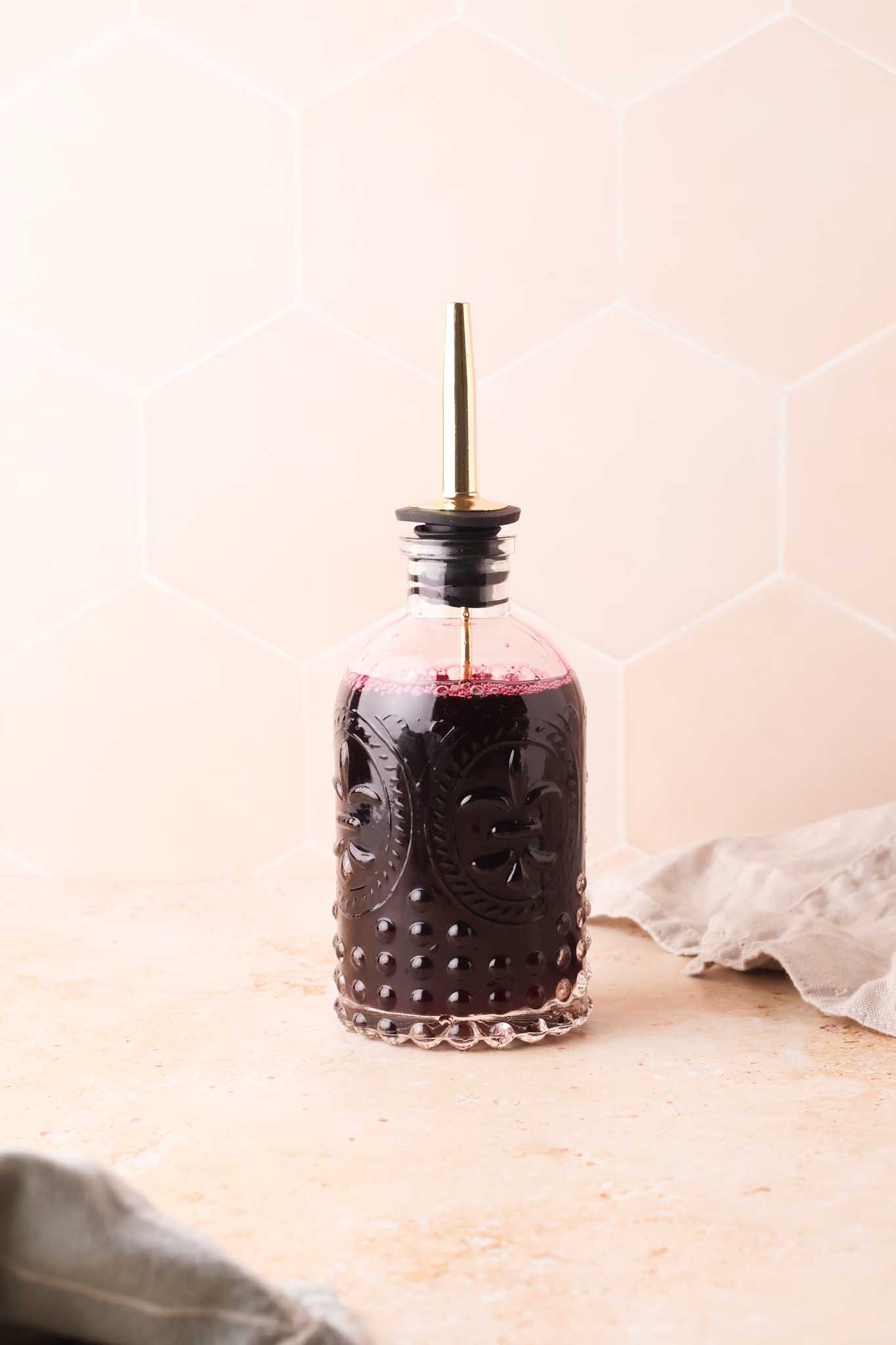
Before pouring, hold the jar up to the light and check the color. Fresh blueberry simple syrup is deeply pigmented and clear. If it looks murky, has developed a hazy film on the surface, those are your signs to start a fresh batch.
Blueberry simple syrup variations
- Blueberry lavender syrup – add some dried culinary lavender while simmering, strain out with the solids. The floral pairing is genuinely excellent.
- Blueberry vanilla syrup – add vanilla extract off the heat. Softer and more dessert-forward, really good over ice cream or in a vanilla iced latte.
- Blueberry lemon syrup – double the lemon juice and add a strip of lemon zest while simmering. Brighter and sharper, better suited to lemonade and cocktails than the standard version.
Frequently asked questions
Can I make blueberry syrup with frozen blueberries?
Yes, and for most uses frozen is the better choice. Frozen blueberries release juice immediately on heating, produce a more consistent deep color, and taste just as good as fresh.
Why did my blueberry syrup turn grey?
Usually one of two things: the syrup was cooked too hard and the heat broke down the anthocyanins that give blueberries their color, or it’s starting to age and the pigment is degrading. Adding lemon juice helps keep the color.
Equipment
- Small saucepan
- Wooden spoon or spatula
- Fine-mesh strainer or sieve
- Glass bottle or jar
Ingredients
- 1 cup fresh or frozen blueberries
- 1 cup white sugar
- 1 cup water filtered
Instructions
- Combine blueberries, sugar, and water in a small saucepan over medium heat. Stir gently as the mixture warms and the berries begin to soften and split.
- Bring to a gentle simmer and cook for 5 to 6 minutes until the blueberries are completely soft and the syrup is deeply colored and glossy. Do not boil hard.
- Remove from heat and rest for 5 minutes. Strain through a fine mesh sieve into a clean jar, pressing the skins firmly to extract all color and flavor.
- Stir in lemon juice if using. Leave uncovered until fully cool before sealing and refrigerating.
Notes
Did you make this recipe?
Please take a moment to leave a comment and provide a star rating below. You can also share your creation on Instagram and tag @mysyruparchive – Thank you for your feedback!

Welcome! I’m Rakiya, a syrup enthusiast with years of experience developing flavors. Every recipe is tested and refined for tasty results. My tips, variations and photos come directly from my kitchen experiments.